

You download the app with the biggest billboard, grab the new-customer discount, and place your first order. Then, three weeks later, you're hunting for a specific hot sauce, a particular brand of baby cereal, or a bulk spice you actually use — and it's not there. That's when you realize you picked based on the wrong things.
Choosing an online grocery delivery service isn't like picking a streaming platform where the content is mostly the same. The differences between services are real, and they show up exactly when you need them most: on a busy Tuesday night, when you're out of something important, or when a substitution shows up at your door that you never wanted.
Here's what actually matters when you compare your options.
Catalog Depth: The Number That Changes Everything
The first question isn't "how fast can they deliver?" — it's "do they actually carry what I buy?" A service with a thin catalog forces you to keep a second grocery account for the stuff they don't stock, which defeats the whole point of ordering online.
Think about your real shopping list. Not just staples like milk and eggs, but the specific almond butter brand your kid will actually eat, the baking spices you use twice a year, the specialty hot sauce, the organic baby formula. A broader catalog means fewer split orders and fewer trips to a physical store to fill the gaps.
When you're evaluating a service, search for three or four of your most specific items before you commit. If two of them come up empty, that's a signal. Catalog breadth isn't a marketing stat — it's a daily convenience factor.
Shipping Thresholds and What "Free Shipping" Actually Means
Free shipping is one of the most advertised features in online grocery — and one of the most misunderstood. Some services offer it unconditionally. Others require a minimum order that's higher than your typical weekly shop. Some bury a service fee or a "small order surcharge" that only appears at checkout.
Before you assume a service is cheaper, do the math on a realistic order. If the free shipping threshold is higher than what you'd normally spend, you're either overspending to qualify or paying a delivery fee every time. Neither is ideal.
Also worth checking: does free shipping apply nationwide, or only in certain zip codes? A service that ships freely to major metro areas may charge extra — or not ship at all — to suburban or rural addresses.
Out-of-Stock Policy: The Detail Nobody Reads Until It Bites Them
This is where services diverge the most, and where the experience can go sideways fast. When an item is out of stock, a grocery service will typically do one of three things: notify you before shipping and let you choose a substitute, automatically pick a substitute on your behalf, or simply remove the item and refund it.
None of those is universally wrong, but you need to know which approach a service takes. Automatic substitutions sound convenient until you get a full-sugar version of a product you bought specifically because it was sugar-free, or a brand your household is allergic to. Refunds are clean but leave you short on something you needed.
Look for services that give you control — ideally letting you pre-select substitution preferences or approve swaps before the order ships. That small policy detail makes a bigger difference to your weekly routine than most people expect.
Product Sourcing and Quality Consistency
Online grocery services source their products in very different ways. Some act as aggregators, pulling from local stores or third-party warehouses with variable quality control. Others source directly from suppliers, which tends to mean more consistent freshness and fewer surprises.
For fresh produce, meat, and dairy especially, sourcing matters. A strawberry that's been sitting in a third-party fulfillment center for an extra day is a different strawberry than one shipped from a dedicated supplier. It's worth reading how a service describes its sourcing — not the marketing language, but the operational reality.
If a service is vague about where its products come from, that's worth noting. Transparency about sourcing is usually a sign that the supply chain is something they're proud of.
Category Coverage vs. Specialization
Some grocery services are built around a niche — organic-only, local produce, meal kits, or a specific diet. Others aim to be a full supermarket replacement. Neither is wrong, but knowing which you're dealing with saves frustration.
If you shop across categories — pantry staples one week, frozen foods the next, baby food alongside snacks and household items — a specialized service will consistently leave gaps. A one-stop service with broad category coverage means one account, one checkout, one delivery window.
On the other hand, if your needs are narrow and specific (say, you only want locally-sourced produce and nothing else), a specialist might serve you better. Be honest about how you actually shop, not how you imagine you shop.
First-Order Discounts: Useful, But Not a Decision Factor
Almost every online grocery service leads with a first-order promo. It's a legitimate perk — use it. But it's the worst possible basis for choosing a long-term service, because it disappears after order one.
The better question is: what does this service cost and deliver for your second, tenth, and fiftieth order? That's the relationship you're actually signing up for. Evaluate the promo as a bonus, not as the reason.
That said, if a service you've already evaluated on the merits happens to offer a welcome discount, there's no reason not to take it. Just let the catalog, the shipping policy, and the substitution approach do the deciding — not the coupon.
A Simple Framework Before You Commit
Run any service through these five questions before placing your first real order:
- Does it carry my specific items? Search for your three most niche products. If they're missing, the catalog is too thin for your needs.
- What's the real cost of shipping? Check the threshold, check for hidden fees, and check whether free shipping applies to your address.
- How does it handle out-of-stocks? Look for a policy that gives you control over substitutions before the order ships.
- Where do the products actually come from? Direct sourcing from suppliers generally means more consistent quality than aggregated third-party fulfillment.
- Does it cover all my grocery categories? If you'll need a second service to fill gaps, the convenience math doesn't work.
If a service answers those five questions well, the first-order discount is a nice bonus. If it doesn't, no promo makes up for the friction of a catalog that doesn't fit your household.
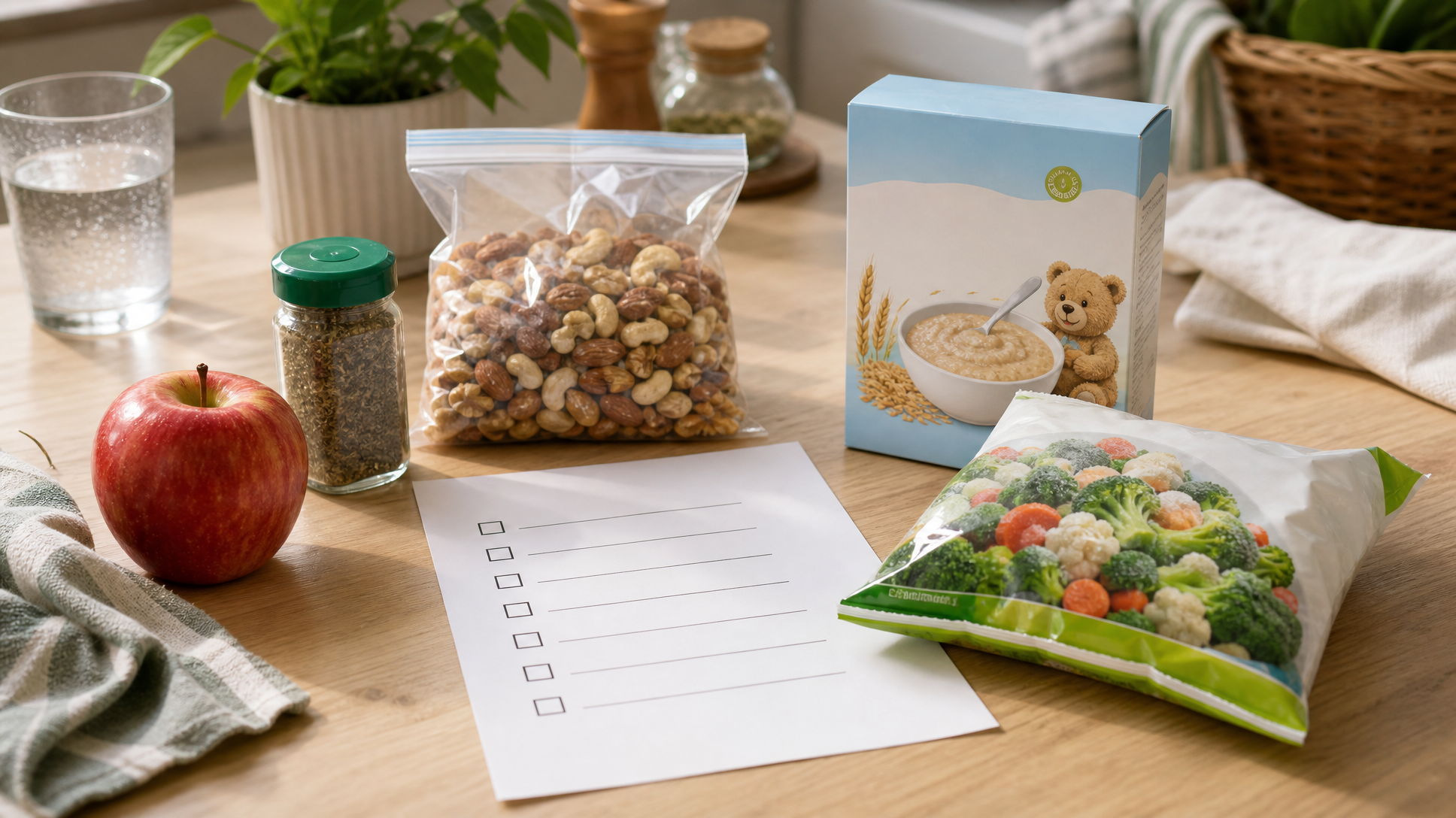
If you're still building your shortlist, Groceryeshop is worth a look — a US-based online grocery store with over 25,000 products across every major category, from fresh produce and pantry staples to frozen foods, baby food, meat, and household essentials, with free shipping on most orders nationwide. You can also check out our piece on whether online grocery shopping actually saves you money — it's a useful companion read before you commit to any service.
The right service is the one that fits how you actually shop — not the one with the most Instagram ads or the flashiest launch promo. Take twenty minutes to run the comparison properly, and you'll save yourself the hassle of switching again in three months.
Frequently Asked Questions
What's the most important factor when choosing an online grocery delivery service?
Catalog depth is usually the deciding factor for most households. A service that doesn't carry your specific brands or specialty items forces you to maintain a second account or make store trips anyway, which cancels out the convenience you signed up for. Start by searching for your three or four most specific products before committing.
How do I know if a grocery delivery service actually ships to my address for free?
Always check the free shipping terms before placing your first order. Some services offer free shipping only above a minimum order total, only in certain regions, or only for subscribers. Enter your zip code and build a realistic cart before checkout to see the true delivery cost — not just the headline offer.
What should I do when an online grocery order has a substitution I didn't want?
Most services allow you to reject a substitution and get a refund for that item. Going forward, look for services that let you set substitution preferences in advance or approve swaps before the order ships — that gives you control and avoids the same problem on future orders.
Is it worth switching online grocery services just to get a first-order discount?
Only if the service genuinely fits your needs on the merits — catalog, shipping, and sourcing. A first-order promo disappears after one purchase, and the friction of switching services (re-entering preferences, learning a new interface, finding out what they don't carry) costs more time than the discount saves. Use the promo as a bonus once you've already decided, not as the reason to decide.
