


You will not be allowed to compare more than 4 products at a time
View compareYogurt Starter Cultures - Pack Of 10 Freeze-Dried Culture Sachets For Bifido Yogurt (10)
Yogurt Starter Cultures - Pack Of 10 Freeze-Dried Culture Sachets For Bifido Yogurt (10)
Hurry! Only left 10 in stock
Regular price
$23.81
Sale price
$23.81
Regular price
$34.01
Unit price
per
Shipping calculated at checkout.
Sold by Groceryeshop, an authorized reseller.
Shipping Information
- Free Standard Shipping — United States only
- Processing Time: 1–3 business days
- Estimated Delivery: 3–5 business days after dispatch
- Securely packed to ensure your purchase arrives in perfect condition
- Tracking number sent via email once dispatched
- Orders over $250 require signature upon delivery. Taxes calculated at checkout.
Returns & Refund
Returns accepted within 30 days of delivery.
Damaged or Defective Item
Free return shipping + replacement or full refund
Wrong Item Received
Free return shipping + replacement or full refund
Change of Mind
Return shipping at customer's expense · Item must be unused & in original packaging
All returns require a Return Authorization (RA) number before sending.
View Full Return & Refund Policy
Safety & Compliance
⚠️
California Proposition 65 Warning
Some products sold on this website may expose you to chemicals known to the State of California to cause cancer, birth defects, or other reproductive harm.
www.P65Warnings.ca.gov
🛒
General Product Safety Advisory
Always read the product label, instructions, and safety warnings before use. Do not use damaged or modified products. Store products in appropriate conditions as specified by the manufacturer.
Keep all products out of reach of children unless specifically designed for their use.
ℹ️
Product Authenticity & Notice
All products sold by GroceryeShop are 100% authentic, sourced directly from trusted suppliers across the USA. Product weights and packaging may vary slightly from images due to seasonal availability and supplier updates.
GroceryeShop — Fresh, Quality Groceries Delivered Nationwide.
Couldn't load pickup availability
Guarantee safe and secure checkout


Product Description
Myth or Not? Many people ask if it is true that the famous Lactobacillus Bulgaricus bacterium is found only in Bulgaria. The correct answer is no - you can grow the bacteria in different parts of the world (in fact many people do). What is unique about the Bulgarian strain is that only in Bulgaria it preserves its qualities in further generations of the same strain, i.e. if you use your previous yogurt to start your new batch. If this is how you make your yogurt outside Bulgaria, you will notice that after a batch or two, the yogurt loses its unique taste, physical appearance and qualities. Why this happens, scientists are not sure. It is often contributed to the unique climate of the region but there's more to creating the perfect conditions for Lactobacillus Bulgaricus than the environment. So how can you prepare Bulgarian yogurt abroad? The answer is simple - use a dried-freeze yogurt starter culture with live Lactobacillus Bulgaricus that was produced in Bulgaria. Use a new culture with every batch of yogurt you make to preserve the unique taste and qualities of the yogurt. In this way you can achieve the traditional taste of kiselo mlyako (кисело мляко) similar to the one our grandmothers used to make, guaranteed.
Frequently Asked Questions
- Q: What ingredients are in the yogurt starter cultures? A: The yogurt starter cultures contain live active bacteria, including Lactobacillus delbrueckii subsp. Bulgaricus, Streptococcus thermophilus, and a blend of Bifidobacteria. These cultures are freeze-dried to maintain their viability and are produced without additives, gluten, and GMOs.
- Q: How many sachets are in the pack? A: There are ten sachets in the pack. Each sachet is designed to make one quart of yogurt, providing ample supply for multiple batches.
- Q: What is the size of each sachet? A: Each sachet contains a specific amount of freeze-dried culture sufficient to make one quart of yogurt. The total pack size is ten count.
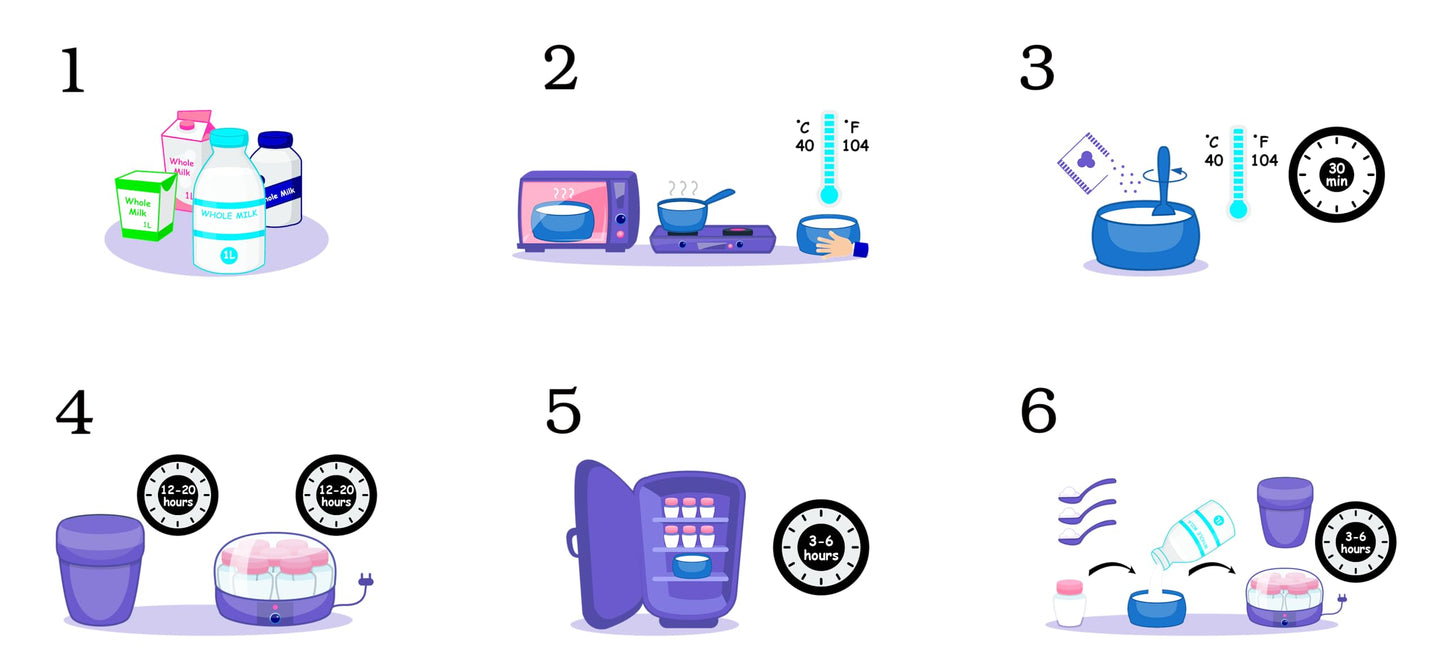
- Q: How do I use the yogurt starter cultures? A: To use the yogurt starter cultures, simply mix one sachet with one quart of milk and incubate according to your yogurt maker’s instructions. You can re-culture using your previous batch of yogurt for a few generations.
- Q: Can I use these cultures with any yogurt maker? A: Yes, these cultures are compatible with all types of yogurt makers. They are designed to work effectively regardless of the yogurt-making method you choose.
- Q: Do I need to use a new sachet for each batch? A: Yes, it is recommended to use a new sachet for each batch of yogurt to preserve the unique taste and qualities. This helps maintain the integrity of the Lactobacillus Bulgaricus strain.
- Q: How should I store the yogurt starter cultures? A: Store the yogurt starter cultures in a cool, dry place. For optimal freshness, keep them sealed in their original packaging until you are ready to use them.
- Q: What is the shelf life of the yogurt starter cultures? A: The yogurt starter cultures have a shelf life of up to 24 months when stored properly. Always check the expiration date on the packaging before use.
- Q: Can the cultures be reused after making yogurt? A: You can reuse yogurt from your previous batch for a limited number of generations. However, using a new sachet ensures the best flavor and quality of the yogurt.
- Q: Is this product gluten-free? A: Yes, the yogurt starter cultures are gluten-free. They are made without gluten, additives, or GMOs, making them suitable for various dietary needs.
- Q: Are these cultures suitable for beginners? A: Yes, these yogurt starter cultures are suitable for beginners. The straightforward usage instructions make it easy for anyone to start making yogurt at home.
- Q: How do these cultures compare to store-bought yogurt? A: These cultures allow you to create homemade yogurt with live probiotics, which may not be present in some store-bought varieties. This ensures freshness and customization of flavor.
- Q: What if the yogurt doesn’t set properly? A: If the yogurt doesn't set, check the incubation time and temperature. Ensure your yogurt maker is functioning correctly and that you've used fresh ingredients.
- Q: What happens if the sachet is damaged or opened? A: If the sachet is damaged or opened, do not use the cultures. For best results, always use intact and sealed sachets to ensure the viability of the bacteria.
- Q: Can I use alternative milks with these cultures? A: These cultures are primarily designed for use with whole milk, but some users have successfully experimented with alternative milks. Results may vary.
- Q: Is this yogurt starter suitable for making dairy-free yogurt? A: While primarily aimed at dairy yogurt, some users have adapted the cultures for dairy-free options. Success will depend on the type of alternative milk used.