

You will not be allowed to compare more than 4 products at a time
View compareFood To Live Organic Rolled Kamut Khorasan Wheat Flakes, 1.5 Pounds – Non-Gmo, Made From Whole Wheat Berries, Kosher, Bulk, Great For Cereal, Granola, Muffins And Milling Into Flour For Baking
Food To Live Organic Rolled Kamut Khorasan Wheat Flakes, 1.5 Pounds – Non-Gmo, Made From Whole Wheat Berries, Kosher, Bulk, Great For Cereal, Granola, Muffins And Milling Into Flour For Baking
Out of stock
Regular price
$20.47
Sale price
$20.47
Regular price
$29.24
Unit price
per
Shipping calculated at checkout.
Sold by GroceryeShop — Fresh & quality products, delivered in USA.
Returns accepted within 30 days | support@groceryeshop.us
Shipping Information
- Free Standard Shipping — United States only
- Processing Time: 3–5 business days
- Estimated Delivery: 6–10 business days after dispatch
- Securely packed to ensure your purchase arrives in perfect condition
- Tracking number sent via email once dispatched
- Orders over $250 require signature upon delivery. Taxes calculated at checkout.
Returns & Refund
Returns accepted within 30 days of delivery.
Damaged or Defective Item
Free return shipping + replacement or full refund
Wrong Item Received
Free return shipping + replacement or full refund
Change of Mind
Return shipping at customer's expense · Item must be unused & in original packaging
All returns require a Return Authorization (RA) number before sending.
View Full Return & Refund Policy
Safety & Compliance
⚠️
California Proposition 65 Warning
Some products sold on this website may expose you to chemicals known to the State of California to cause cancer, birth defects, or other reproductive harm.
www.P65Warnings.ca.gov
🛒
General Product Safety Advisory
Always read the product label, instructions, and safety warnings before use. Do not use damaged or modified products. Store products in appropriate conditions as specified by the manufacturer.
Keep all products out of reach of children unless specifically designed for their use.
ℹ️
Product Authenticity & Notice
All products sold by GroceryeShop are 100% authentic, sourced directly from trusted suppliers across the USA. Product weights and packaging may vary slightly from images due to seasonal availability and supplier updates.
GroceryeShop — Fresh, Quality Groceries Delivered Nationwide.
Couldn't load pickup availability
Guarantee safe and secure checkout

Product Description
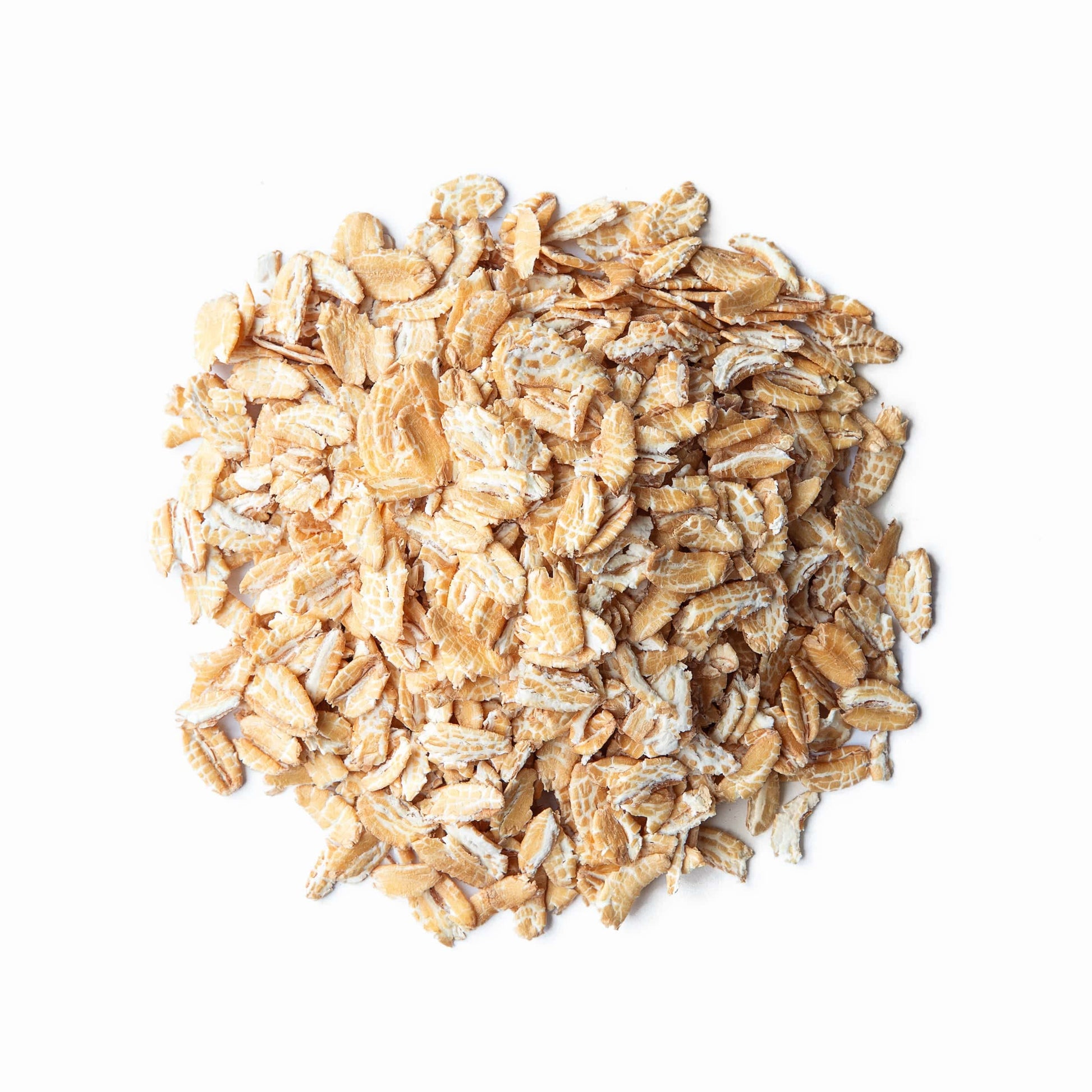
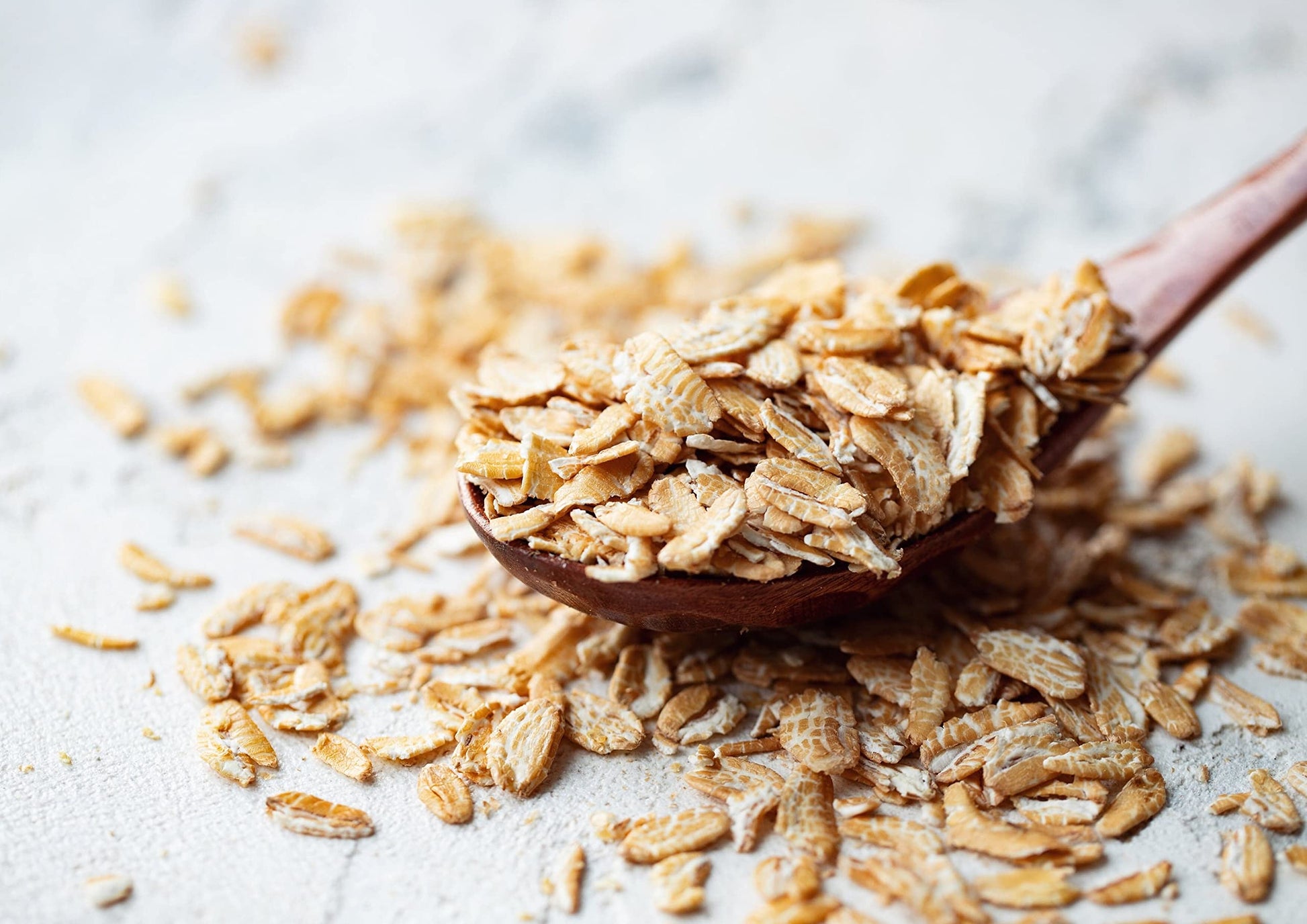
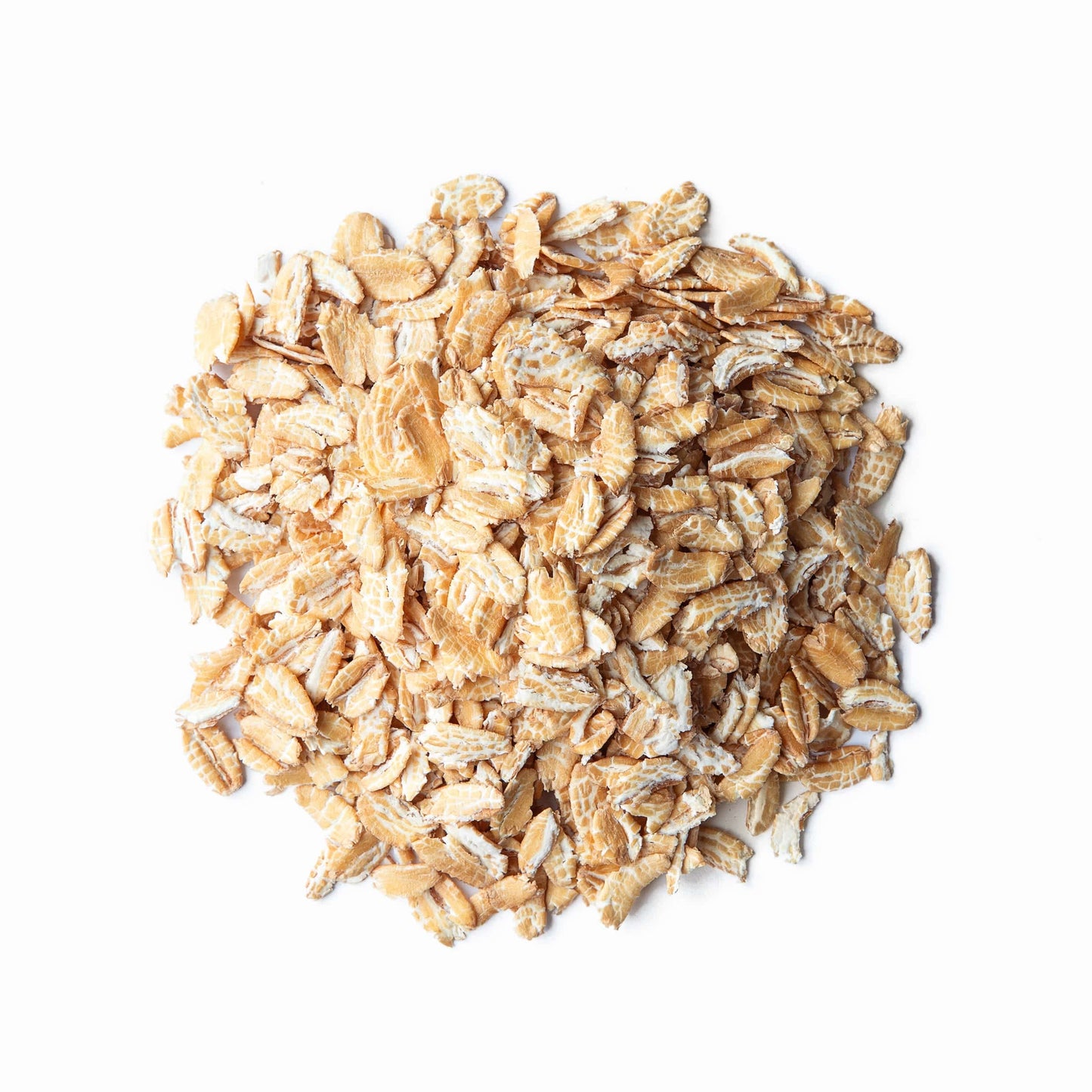
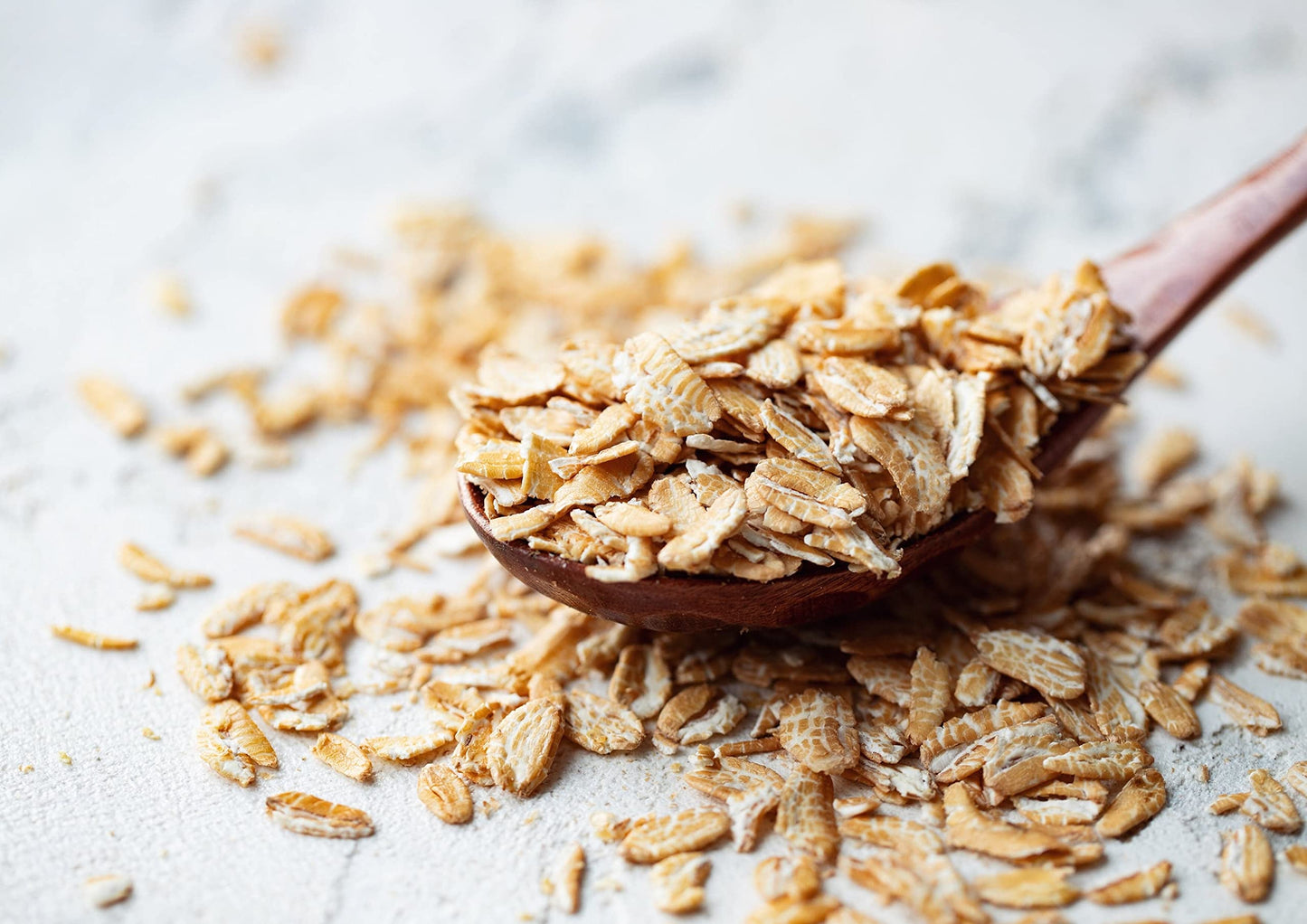
What are organic Kamut flakes? Kamut grain flakes are produced by steaming and flattening whole grains. Kamut grain is the ancient variety of wheat, which was found in the sarcophagus of a pharaoh during excavations in Egypt. Surprisingly, 5000 years old grains germinated when a farmer from Montana planted them. Now, Kamut's production is under a license and has a trading name, "Kamut." Nutrients The content of protein, unsaturated fatty acids, amino acids, vitamins, and minerals in Kamut is higher than in other wheat varieties. Kamut is rich in vitamins E, B2, B5, B6, and folic acid. This ancient wheat also contains magnesium, calcium, and phosphorus. The trace mineral selenium contained in it supports healthy skin and hair. People with gluten intolerance (a non-allergenic and non-autoimmune gluten-related functional disorder) often tolerate organic Kamut wheat flakes better than other wheat varieties. Many people's reactions are usually caused by wheat allergies, not gluten intolerances, as is often mistakenly assumed. Organic Kamut wheat flakes are high in fiber. With regular consumption of Kamut and enough fluids, they will support intestinal health. Cooking with organic Kamut flakes First of all, organic Kamut wheat flakes is an alternative to oat flakes. Therefore, you can use the recipes for oat flakes to cook them. However, some of the ideas of cooking are still worth mentioning. The best way to eat organic Kamut flakes is to make porridge from them. The other way is to cook granola with rolled Kamut flakes and dried fruit. Soaked overnight, they can also be added to muesli.
Frequently Asked Questions
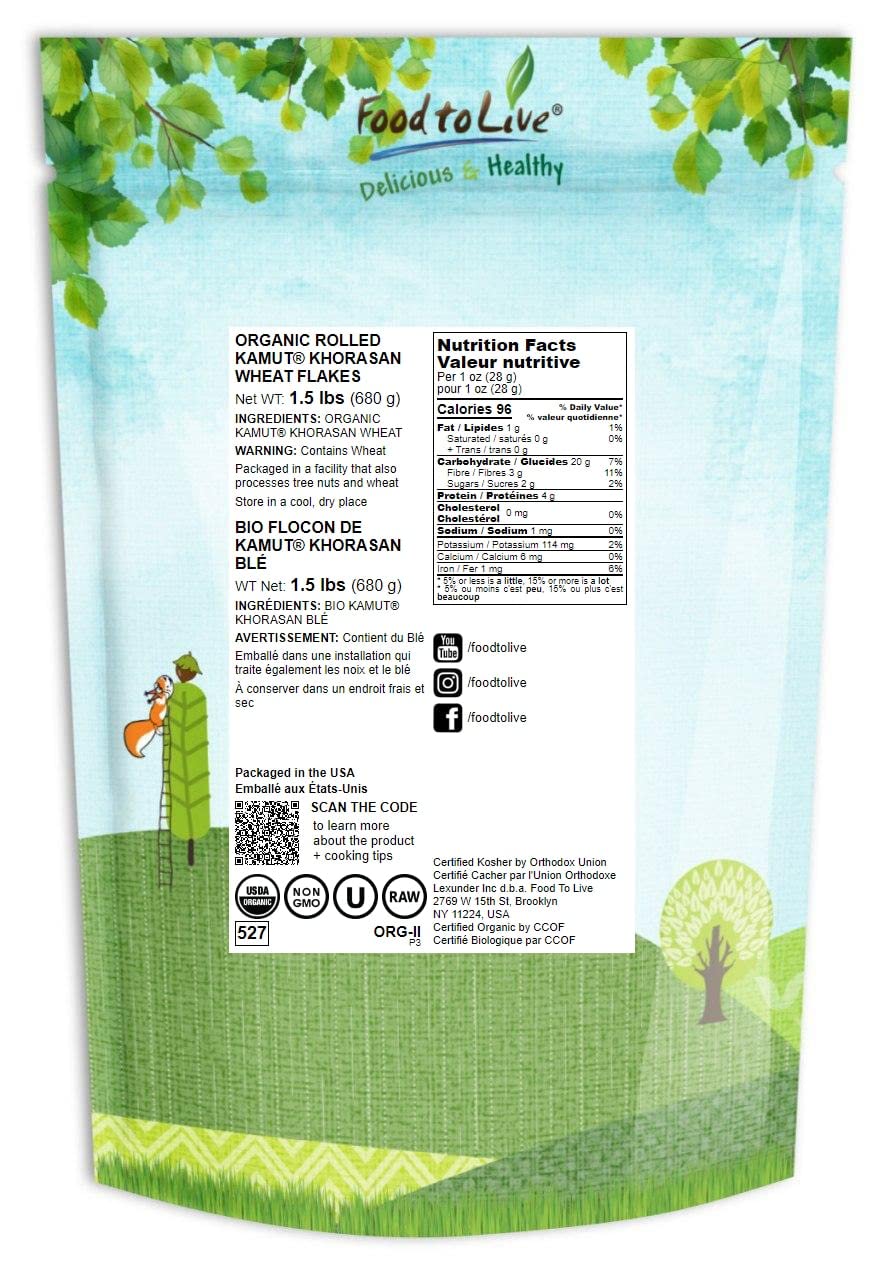
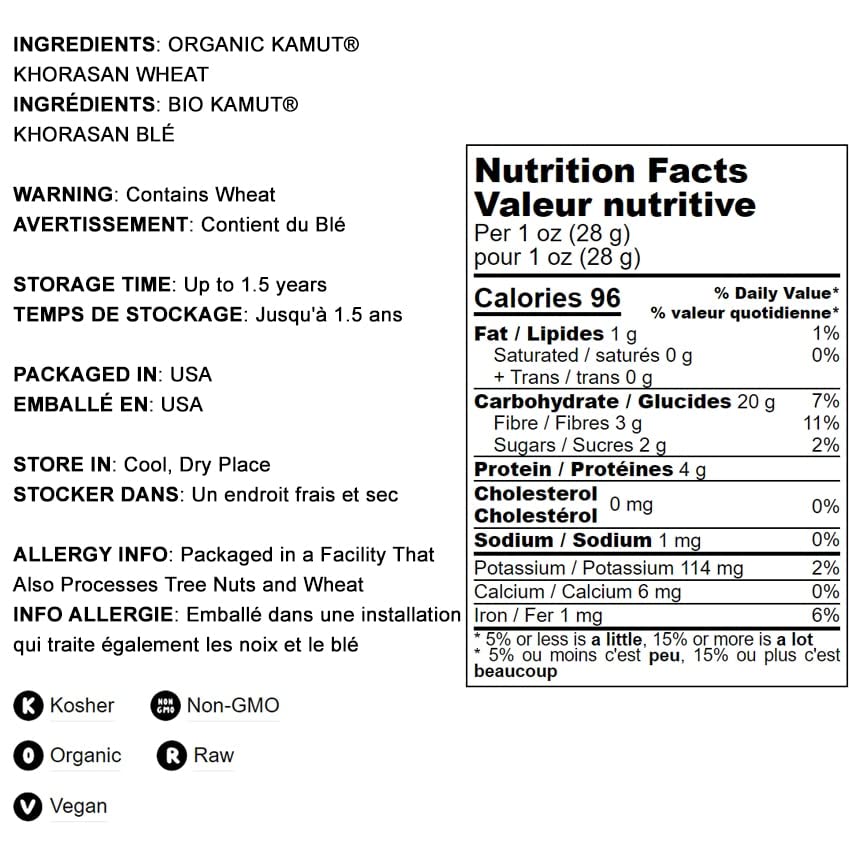
- Q: What are the ingredients in Food to Live Organic Rolled KAMUT Khorasan Wheat Flakes? A: The only ingredient is organic rolled Kamut Khorasan wheat flakes. These flakes are made from whole wheat berries, ensuring a nutritious option.
- Q: How big is the package of Food to Live Organic Rolled KAMUT Khorasan Wheat Flakes? A: The package contains one point five pounds, or twenty-four ounces, of organic rolled Kamut flakes.
- Q: Are these Kamut flakes gluten-free? A: No, these Kamut flakes are not gluten-free. They are made from Khorasan wheat, which contains gluten.
- Q: How can I cook with Food to Live Organic Rolled KAMUT Khorasan Wheat Flakes? A: You can cook them by making porridge, adding them to granola, or soaking them overnight for muesli. They can replace oat flakes in recipes.
- Q: Are there any specific recipes for using Kamut flakes? A: Yes, you can use them to prepare porridge or granola. They can also be added to baked goods like muffins.
- Q: Can I use Kamut flakes for baking? A: Yes, you can mill Kamut flakes into flour for baking. They add a nutritious element to your baked goods.
- Q: How should I store Food to Live Organic Rolled KAMUT Khorasan Wheat Flakes? A: Store them in a cool, dry place in an airtight container to maintain freshness.
- Q: What is the shelf life of these Kamut flakes? A: When stored properly, these organic Kamut flakes can last for up to one year.
- Q: Are there any allergens in Food to Live Organic Rolled KAMUT Khorasan Wheat Flakes? A: The product is made from wheat and may not be suitable for those with wheat allergies.
- Q: What makes Kamut flakes different from regular wheat flakes? A: Kamut flakes are made from an ancient variety of wheat with higher nutrient content, including protein and vitamins.
- Q: Is Food to Live Organic Rolled KAMUT Khorasan Wheat Flakes suitable for people with gluten intolerance? A: Some people with gluten intolerance tolerate Kamut better than other wheat varieties, but it is not gluten-free.
- Q: Are these flakes certified organic? A: Yes, the Kamut flakes are certified organic and free of GMOs and chemical fertilizers.
- Q: Can kids eat Food to Live Organic Rolled KAMUT Khorasan Wheat Flakes? A: Yes, they are suitable for children, providing a nutritious breakfast option.
- Q: What health benefits do Kamut flakes offer? A: Kamut flakes are rich in nutrients, including vitamins E, B2, B5, B6, and minerals like magnesium and calcium.
- Q: How do I know if I am allergic to Kamut flakes? A: If you have a known wheat allergy, it is best to avoid Kamut flakes, as they are derived from wheat.
- Q: How do I prepare Kamut flakes for breakfast? A: To prepare Kamut flakes, simply cook them with water or milk to make porridge, or add them to yogurt or milk for a quick breakfast.