


You will not be allowed to compare more than 4 products at a time
View compareFood To Live Wheat Berries, 8 Ounces – Sprouting For Wheatgrass, Kosher, Raw, Vegan, Bulk
Food To Live Wheat Berries, 8 Ounces – Sprouting For Wheatgrass, Kosher, Raw, Vegan, Bulk
Out of stock
Regular price
$14.46
Sale price
$14.46
Regular price
$20.66
Unit price
per
Shipping calculated at checkout.
Sold by GroceryeShop — Fresh & quality products, delivered in USA.
Returns accepted within 30 days | support@groceryeshop.us
Shipping Information
- Free Standard Shipping — United States only
- Processing Time: 3–5 business days
- Estimated Delivery: 6–10 business days after dispatch
- Securely packed to ensure your purchase arrives in perfect condition
- Tracking number sent via email once dispatched
- Orders over $250 require signature upon delivery. Taxes calculated at checkout.
Returns & Refund
Returns accepted within 30 days of delivery.
Damaged or Defective Item
Free return shipping + replacement or full refund
Wrong Item Received
Free return shipping + replacement or full refund
Change of Mind
Return shipping at customer's expense · Item must be unused & in original packaging
All returns require a Return Authorization (RA) number before sending.
View Full Return & Refund Policy
Safety & Compliance
⚠️
California Proposition 65 Warning
Some products sold on this website may expose you to chemicals known to the State of California to cause cancer, birth defects, or other reproductive harm.
www.P65Warnings.ca.gov
🛒
General Product Safety Advisory
Always read the product label, instructions, and safety warnings before use. Do not use damaged or modified products. Store products in appropriate conditions as specified by the manufacturer.
Keep all products out of reach of children unless specifically designed for their use.
ℹ️
Product Authenticity & Notice
All products sold by GroceryeShop are 100% authentic, sourced directly from trusted suppliers across the USA. Product weights and packaging may vary slightly from images due to seasonal availability and supplier updates.
GroceryeShop — Fresh, Quality Groceries Delivered Nationwide.
Couldn't load pickup availability
Guarantee safe and secure checkout


Product Description
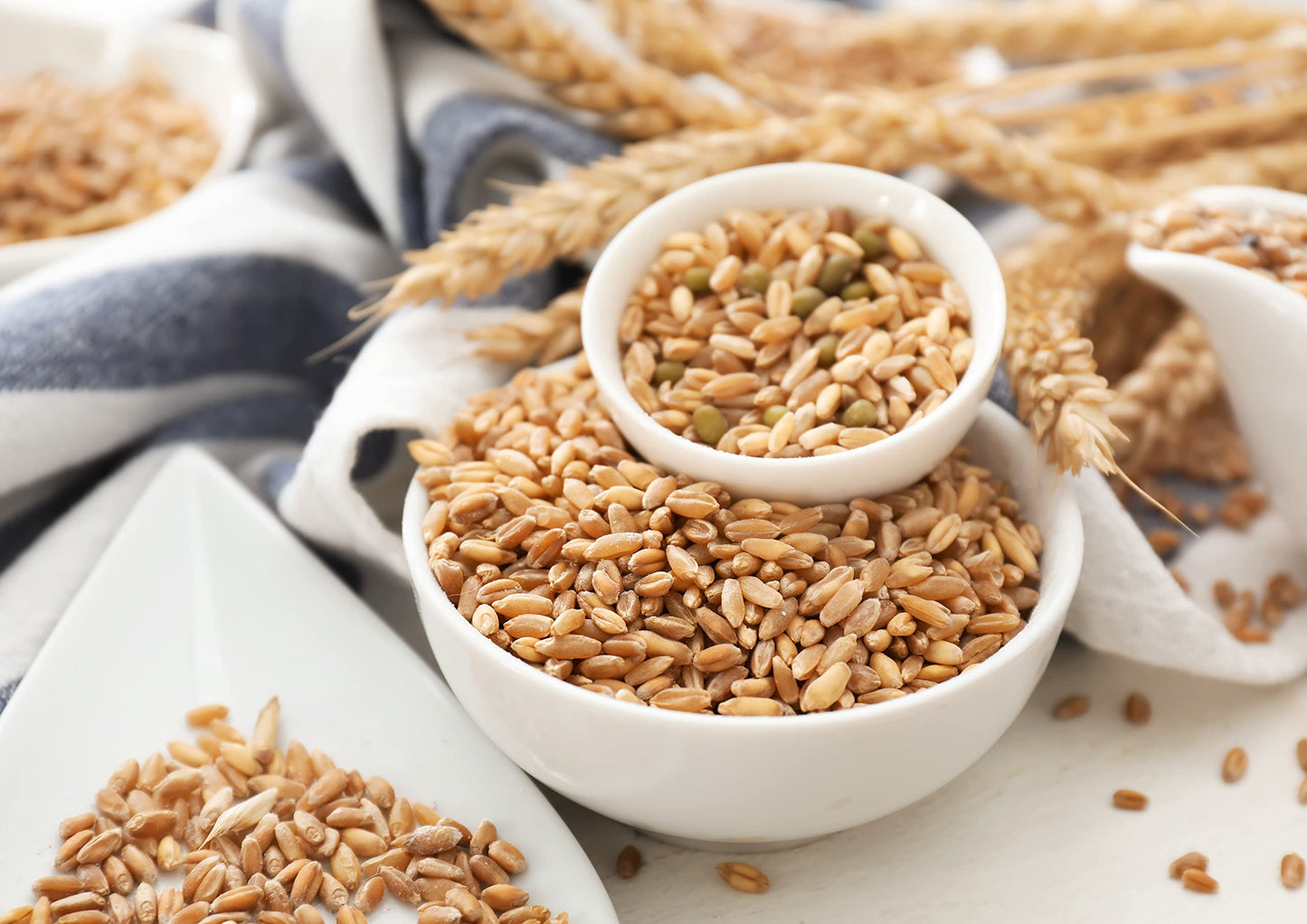
Wheat grains are considered the main grain crop that was first mastered by mankind. Wheat grains contain starch and various carbohydrates. Also, wheat grains contain: vegetable fats; vitamins of group B, PP, E, C, and others; magnesium; calcium; phosphorus; potassium; iron; zinc. Sprouted wheat grain, having a seedling of 1-2 mm, is most valuable in its amino acid, vitamin, and mineral composition compared to conventional ungrown wheat grain. For example, when germinating, the amount of vitamins E and group B in wheat grain increases several times, since vitamin C is present in the composition. How to Use Sprouted wheat is best served for breakfast. Sprouted wheat berries can be consumed both in whole and in a chopped form (chopped in a blender). You can add whole grains of germinated wheat to various salads, soups, side dishes. Shredded sprouted wheat can be used to make healthy cereal and bake bread. Wheatgrass Wheatgrass is prepared by sprouting wheat seeds in water for 7-10 days before harvesting the leaves. Eating raw wheatgrass is more useful than eating cooked wheatgrass as the enzymes responsible for detoxifying the body are thought to be deactivated by cooking foods. Nutritional info: Chlorophyll Vitamins A, C, E, K and B-complex Iron Calcium Magnesium Selenium Amino acids Green sprouts of wheat should be consumed fresh within 20 minutes after cutting to get the maximum benefit from this product. You can consume wheatgrass in many ways: in the form of juice or smoothies; add to various salads and combine with other herbs; prepare sauces and dressings. It is recommended to store wheat grains in a well-ventilated area and in bags made of natural materials.
Frequently Asked Questions
- Q: What are the main ingredients in Food to Live Wheat Berries? A: Food to Live Wheat Berries consist of unprocessed wheat kernels. They are raw, vegan, and non-GMO verified.
- Q: How much does a package of Food to Live Wheat Berries weigh? A: Each package contains eight ounces of wheat berries. This size is convenient for various culinary uses.
- Q: What nutritional benefits do Wheat Berries provide? A: Wheat Berries are highly nutritious, offering vitamins A, C, E, K, and B-complex, as well as minerals like iron and magnesium.
- Q: How can I incorporate Wheat Berries into my meals? A: Wheat Berries can be served whole or chopped, added to salads, soups, or used in baking. They are versatile for various dishes.
- Q: Can I grow wheatgrass from Food to Live Wheat Berries? A: Yes, you can easily grow wheatgrass using these wheat berries. They have a high germination rate, requiring minimal effort.
- Q: Is there a recommended way to prepare Wheat Berries? A: Wheat Berries can be cooked and served as a side dish or breakfast. They can also be blended for smoothies or cereals.
- Q: How should I store Food to Live Wheat Berries? A: Store Wheat Berries in a cool, well-ventilated area using bags made of natural materials for optimal freshness.
- Q: What is the shelf life of Food to Live Wheat Berries? A: Wheat Berries have an excellent shelf life of up to four years when stored properly. This makes them a budget-friendly option.
- Q: Are Food to Live Wheat Berries suitable for all diets? A: Yes, they are suitable for various diets including vegan, raw, and kosher. They are also free from trans fats and cholesterol.
- Q: What precautions should I take when consuming wheatgrass? A: It's best to eat fresh wheatgrass within twenty minutes of cutting for maximum nutrient benefits, often in juice or smoothies.
- Q: Can I use Wheat Berries in baking? A: Yes, shredded Wheat Berries can be used in baking to make healthy bread and cereals. They add nutritional value to baked goods.
- Q: What are the health benefits of sprouted Wheat Berries? A: Sprouted Wheat Berries are richer in vitamins and minerals, as germination increases the levels of vitamins E and B-complex.
- Q: How do I know if Wheat Berries are fresh? A: Fresh Wheat Berries should have a pleasant, nutty smell and a firm texture. Avoid any that feel soft or have an off odor.
- Q: What recipes can I try with Wheat Berries? A: You can experiment with Wheat Berries in salads, soups, grain bowls, and as a substitute for rice or quinoa in recipes.
- Q: What should I do if my Wheat Berries arrive damaged? A: If your Wheat Berries arrive damaged, contact customer support for assistance with returns or replacements as per their policy.