

You will not be allowed to compare more than 4 products at a time
View compareCAPYBARA Tartaric Acid Food Grade - 8 Oz (226.8 g) - Ideal for Baking and Fermentation
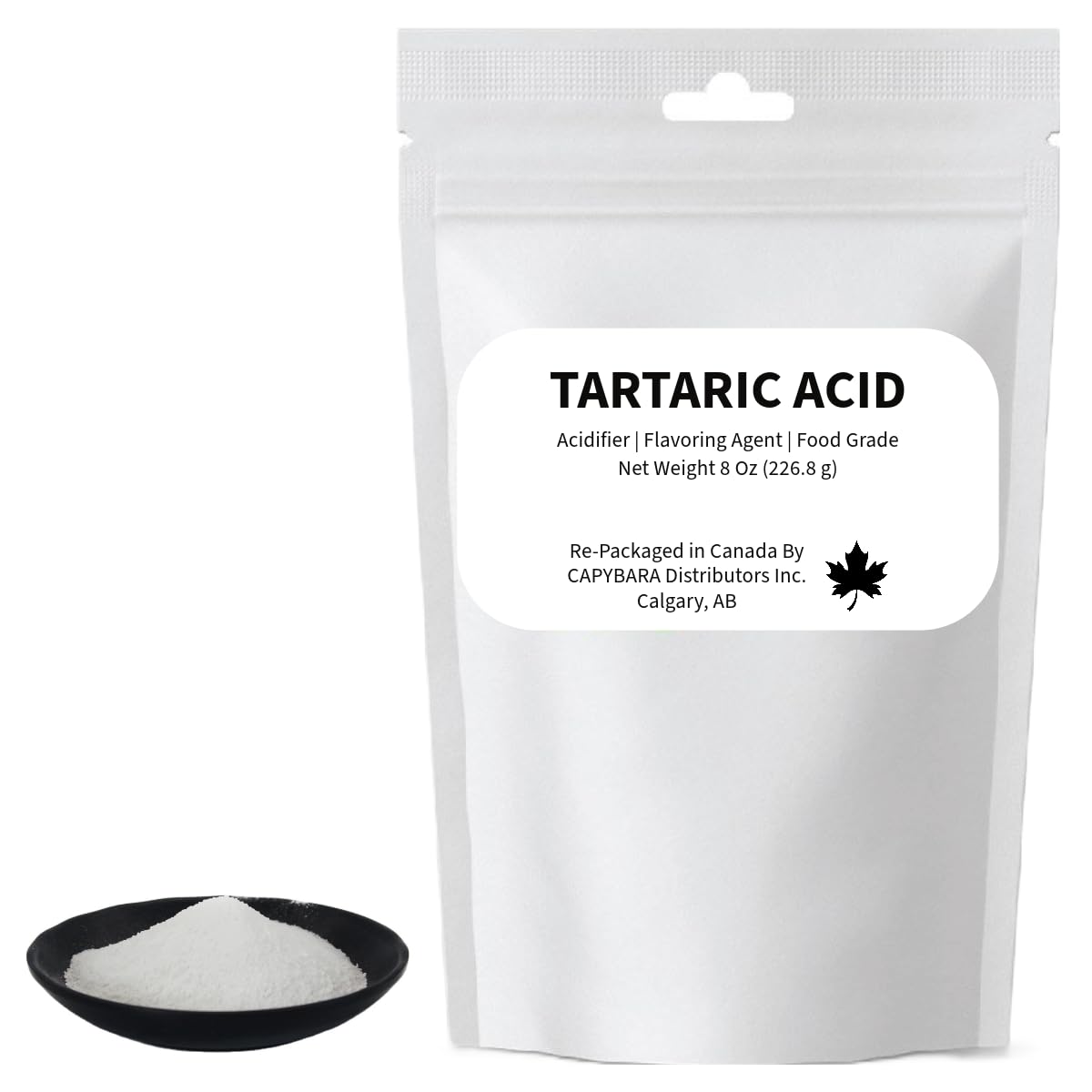
CAPYBARA Tartaric Acid Food Grade - 8 Oz (226.8 g) - Ideal for Baking and Fermentation
Out of stock
Regular price
$13.14
Sale price
$13.14
Regular price
$18.77
Unit price
per
Shipping calculated at checkout.
Sold by GroceryeShop — Fresh & quality products, delivered in USA.
Returns accepted within 30 days | support@groceryeshop.us
Shipping Information
- Free Standard Shipping — United States only
- Processing Time: 3–5 business days
- Estimated Delivery: 6–10 business days after dispatch
- Securely packed to ensure your purchase arrives in perfect condition
- Tracking number sent via email once dispatched
- Orders over $250 require signature upon delivery. Taxes calculated at checkout.
Returns & Refund
Returns accepted within 30 days of delivery.
Damaged or Defective Item
Free return shipping + replacement or full refund
Wrong Item Received
Free return shipping + replacement or full refund
Change of Mind
Return shipping at customer's expense · Item must be unused & in original packaging
All returns require a Return Authorization (RA) number before sending.
View Full Return & Refund Policy
Safety & Compliance
⚠️
California Proposition 65 Warning
Some products sold on this website may expose you to chemicals known to the State of California to cause cancer, birth defects, or other reproductive harm.
www.P65Warnings.ca.gov
🛒
General Product Safety Advisory
Always read the product label, instructions, and safety warnings before use. Do not use damaged or modified products. Store products in appropriate conditions as specified by the manufacturer.
Keep all products out of reach of children unless specifically designed for their use.
ℹ️
Product Authenticity & Notice
All products sold by GroceryeShop are 100% authentic, sourced directly from trusted suppliers across the USA. Product weights and packaging may vary slightly from images due to seasonal availability and supplier updates.
GroceryeShop — Fresh, Quality Groceries Delivered Nationwide.
Couldn't load pickup availability
Guarantee safe and secure checkout
Product Description
Tartaric acid is a naturally occurring organic acid predominantly found in g s. This versatile ingredient is widely used in the food industry, particularly in winemaking, due to its ability to enhance flavor and maintain freshness. It serves various culinary purposes, making it an essential addition to any kitchen.
The food-grade tartaric acid comes in an 8-ounce (226.8 g) package, ensuring you have enough to meet your baking and culinary needs. Known for its sour taste, tartaric acid acts as an effective acidulant, flavoring agent, antioxidant, and chelating agent. It is commonly employed in the production of wines, beverages, juices, marmalades, ice cream, and various confections. Additionally, this ingredient helps to improve texture and preserve the quality of food products.
Key Features:- INCLUDES: 8 Oz (226.8 g) of Food Grade Tartaric Acid.
- Adjusts acidity by +0.1% when 3.8g is added per gallon, making it ideal for winemaking.
- Acts as a preservative by lowering pH, which helps to prevent spoilage.
- Useful in baking as an emulsifier and preservative in bread-making and confectionery.
- Re-packaged in Canada by CAPYBARA Distributors Inc., ensuring quality and reliability.
This food-grade tartaric acid is perfect for home bakers, professional chefs, and anyone involved in winemaking or food preservation. Its multiple applications in enhancing flavor and extending shelf life make it a valuable ingredient for a variety of culinary projects. Whether you are experimenting with new recipes or perfecting classic dishes, this tartaric acid will help you achieve the desired taste and quality in your food preparations.
Frequently Asked Questions
- Q: What is the size of the Tartaric Acid Food Grade package? A: The Tartaric Acid Food Grade package contains eight ounces, or two hundred twenty-six point eight grams, of tartaric acid.
- Q: What ingredients are in the Tartaric Acid Food Grade? A: The Tartaric Acid Food Grade consists solely of tartaric acid, a naturally occurring organic acid derived from grapes.
- Q: Is the Tartaric Acid Food Grade suitable for baking? A: Yes, the Tartaric Acid Food Grade is suitable for baking and can be used as an emulsifier and preservative.
- Q: How do I use Tartaric Acid in winemaking? A: Use three point eight grams of Tartaric Acid per gallon to adjust acidity by point one percent in winemaking.
- Q: Can I use Tartaric Acid in beverages? A: Yes, Tartaric Acid can be used to enhance the tartness in beverages such as wines, juices, and sodas.
- Q: How does Tartaric Acid affect the flavor of food? A: Tartaric Acid provides a sour taste and acts as an acidulant, enhancing the flavor profile of various foods.
- Q: How should I store Tartaric Acid Food Grade? A: Store Tartaric Acid Food Grade in a cool, dry place away from direct sunlight to maintain its quality.
- Q: Is Tartaric Acid safe to consume? A: Yes, Tartaric Acid is safe to consume when used in food-grade applications as directed.
- Q: Does Tartaric Acid have an expiration date? A: While Tartaric Acid does not spoil, it's best to use it within two years for optimal quality.
- Q: Can I use Tartaric Acid in candy making? A: Yes, Tartaric Acid is commonly used in the preparation of candies to enhance flavor and preserve freshness.
- Q: What types of beverages can I use Tartaric Acid in? A: You can use Tartaric Acid in wines, ciders, meads, and even some soft drinks for added tartness.
- Q: How do I measure Tartaric Acid for recipes? A: For recipes, use a scale to measure three point eight grams of Tartaric Acid per gallon when adjusting acidity.
- Q: Is Tartaric Acid effective in preventing spoilage? A: Yes, Tartaric Acid acts as a preservative by lowering pH, which helps prevent spoilage in food products.
- Q: Can Tartaric Acid be used in gelatin desserts? A: Yes, Tartaric Acid can be used in gelatin desserts to add a tart flavor and improve texture.
- Q: What is the primary use of Tartaric Acid in baking? A: In baking, Tartaric Acid is primarily used as a leavening agent and to stabilize egg whites.