


You will not be allowed to compare more than 4 products at a time
View compareEastanbul Bay Leaves, 1.1oz, Dried Bay Leaves Whole, Bayleaf, Farm Fresh, Handpicked Vegan Laurel Leaves, Turkish Spice for Cook
Eastanbul Bay Leaves, 1.1oz, Dried Bay Leaves Whole, Bayleaf, Farm Fresh, Handpicked Vegan Laurel Leaves, Turkish Spice for Cook
Out of stock
Regular price
$9.18
Sale price
$9.18
Regular price
$13.11
Unit price
per
Shipping calculated at checkout.
Sold by GroceryeShop — Fresh & quality products, delivered in USA.
Returns accepted within 30 days | support@groceryeshop.us
Shipping Information
- Free Standard Shipping — United States only
- Processing Time: 3–5 business days
- Estimated Delivery: 6–10 business days after dispatch
- Securely packed to ensure your purchase arrives in perfect condition
- Tracking number sent via email once dispatched
- Orders over $250 require signature upon delivery. Taxes calculated at checkout.
Returns & Refund
Returns accepted within 30 days of delivery.
Damaged or Defective Item
Free return shipping + replacement or full refund
Wrong Item Received
Free return shipping + replacement or full refund
Change of Mind
Return shipping at customer's expense · Item must be unused & in original packaging
All returns require a Return Authorization (RA) number before sending.
View Full Return & Refund Policy
Safety & Compliance
⚠️
California Proposition 65 Warning
Some products sold on this website may expose you to chemicals known to the State of California to cause cancer, birth defects, or other reproductive harm.
www.P65Warnings.ca.gov
🛒
General Product Safety Advisory
Always read the product label, instructions, and safety warnings before use. Do not use damaged or modified products. Store products in appropriate conditions as specified by the manufacturer.
Keep all products out of reach of children unless specifically designed for their use.
ℹ️
Product Authenticity & Notice
All products sold by GroceryeShop are 100% authentic, sourced directly from trusted suppliers across the USA. Product weights and packaging may vary slightly from images due to seasonal availability and supplier updates.
GroceryeShop — Fresh, Quality Groceries Delivered Nationwide.
Couldn't load pickup availability
Guarantee safe and secure checkout


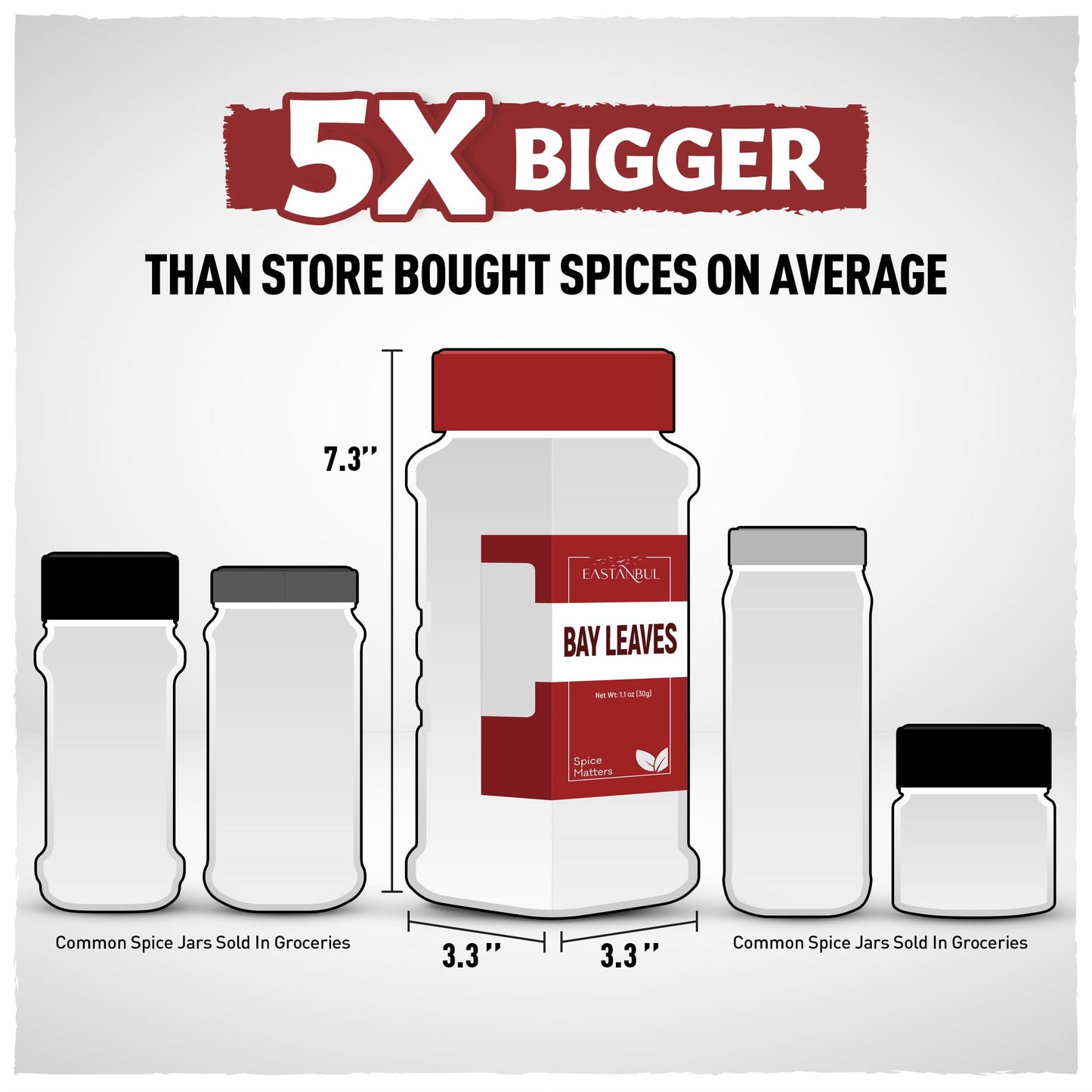
Product Description
Bay LeavesAlso Known As: Laurel Leaves, Sweet Bay, Grecian LaurelOrigin: Derived from the aromatic leaves of the bay laurel tree (Laurus nobilis), native to the Mediterranean region.Ingredients: 100% dried bay leavesTaste and Aroma: A pungent, herbal fragrance with a subtle, earthy taste when infused in dishes.Uses: Enhance soups, stews, sauces, and marinades. Often used in pickling and as a flavoring agent in various cuisines.Substitutes: Thyme, oregano, or basil leaves in a pinch, but with a different flavor profile.Fun Fact: In ancient times, bay leaves were considered a symbol of honor, glory, and wisdom.
Frequently Asked Questions
- Q: What are Eastanbul Bay Leaves made of? A: Eastanbul Bay Leaves are made of one hundred percent dried bay leaves. These leaves are sourced from the aromatic bay laurel tree, known for their rich flavor.
- Q: How much does the package of Eastanbul Bay Leaves weigh? A: The package contains one point one ounces of bay leaves. This size is ideal for various culinary applications.
- Q: What is the origin of Eastanbul Bay Leaves? A: Eastanbul Bay Leaves originate from Turkey. They are cultivated on the Aegean Coast, known for its unique climate that enhances the leaves' quality.
- Q: How do I use Eastanbul Bay Leaves in cooking? A: You can use Eastanbul Bay Leaves to enhance the flavor of soups, stews, and sauces. Simply add one or two leaves during cooking for a subtle, aromatic taste.
- Q: Can I use Eastanbul Bay Leaves in tea? A: Yes, you can use Eastanbul Bay Leaves in tea. They impart a distinct herbal flavor when steeped in hot water.
- Q: Are Eastanbul Bay Leaves suitable for vegan diets? A: Yes, Eastanbul Bay Leaves are completely vegan. They contain no animal products or byproducts.
- Q: How should I store Eastanbul Bay Leaves? A: Store Eastanbul Bay Leaves in a cool, dry place away from sunlight. This helps preserve their flavor and aroma for longer.
- Q: Do Eastanbul Bay Leaves have an expiration date? A: Yes, dried bay leaves have a shelf life of about two to three years. Check the packaging for specific expiration details.
- Q: Are there any allergens in Eastanbul Bay Leaves? A: No, Eastanbul Bay Leaves do not contain common allergens. They are free from gluten and harmful additives.
- Q: What flavors pair well with Eastanbul Bay Leaves? A: Eastanbul Bay Leaves pair well with tomatoes, garlic, onion, and herbs like rosemary. They enhance the overall flavor of many dishes.
- Q: How do Eastanbul Bay Leaves compare to other herbs? A: Eastanbul Bay Leaves have a distinctive pungent aroma and slightly bitter taste, unlike substitutes like thyme or oregano, which have milder flavors.
- Q: What if my Eastanbul Bay Leaves arrive damaged? A: If your Eastanbul Bay Leaves arrive damaged, you can return them for a full refund. Contact customer support for assistance.
- Q: Can I return Eastanbul Bay Leaves if I'm not satisfied? A: Yes, Eastanbul offers a thirty-day money-back guarantee. If you're unsatisfied, you can return the product within this period.
- Q: Is there a warranty on Eastanbul Bay Leaves? A: No, there is no warranty on Eastanbul Bay Leaves as they are a food product. However, customer satisfaction is guaranteed.
- Q: How do I know if Eastanbul Bay Leaves are fresh? A: You can determine freshness by checking for strong aroma and vibrant color. Fresh bay leaves should not appear dull or crumbly.
- Q: Are Eastanbul Bay Leaves ethically sourced? A: Yes, Eastanbul is committed to responsible sourcing and ensures that their bay leaves are harvested sustainably.