


You will not be allowed to compare more than 4 products at a time
View compareEden Genmaicha Organic Green Tea, Sencha Green Tea With Roasted Organic Brown Rice, Japanese, 16 Unbleached Manila Tea Bags/Box (3-Pack)
Eden Genmaicha Organic Green Tea, Sencha Green Tea With Roasted Organic Brown Rice, Japanese, 16 Unbleached Manila Tea Bags/Box (3-Pack)
Out of stock
Regular price
$27.57
Sale price
$27.57
Regular price
$39.39
Unit price
per
Shipping calculated at checkout.
Sold by GroceryeShop — Fresh & quality products, delivered in USA.
Returns accepted within 30 days | support@groceryeshop.us
Shipping Information
- Free Standard Shipping — United States only
- Processing Time: 3–5 business days
- Estimated Delivery: 6–10 business days after dispatch
- Securely packed to ensure your purchase arrives in perfect condition
- Tracking number sent via email once dispatched
- Orders over $250 require signature upon delivery. Taxes calculated at checkout.
Returns & Refund
Returns accepted within 30 days of delivery.
Damaged or Defective Item
Free return shipping + replacement or full refund
Wrong Item Received
Free return shipping + replacement or full refund
Change of Mind
Return shipping at customer's expense · Item must be unused & in original packaging
All returns require a Return Authorization (RA) number before sending.
View Full Return & Refund Policy
Safety & Compliance
⚠️
California Proposition 65 Warning
Some products sold on this website may expose you to chemicals known to the State of California to cause cancer, birth defects, or other reproductive harm.
www.P65Warnings.ca.gov
🛒
General Product Safety Advisory
Always read the product label, instructions, and safety warnings before use. Do not use damaged or modified products. Store products in appropriate conditions as specified by the manufacturer.
Keep all products out of reach of children unless specifically designed for their use.
ℹ️
Product Authenticity & Notice
All products sold by GroceryeShop are 100% authentic, sourced directly from trusted suppliers across the USA. Product weights and packaging may vary slightly from images due to seasonal availability and supplier updates.
GroceryeShop — Fresh, Quality Groceries Delivered Nationwide.
Couldn't load pickup availability
Guarantee safe and secure checkout


Product Description
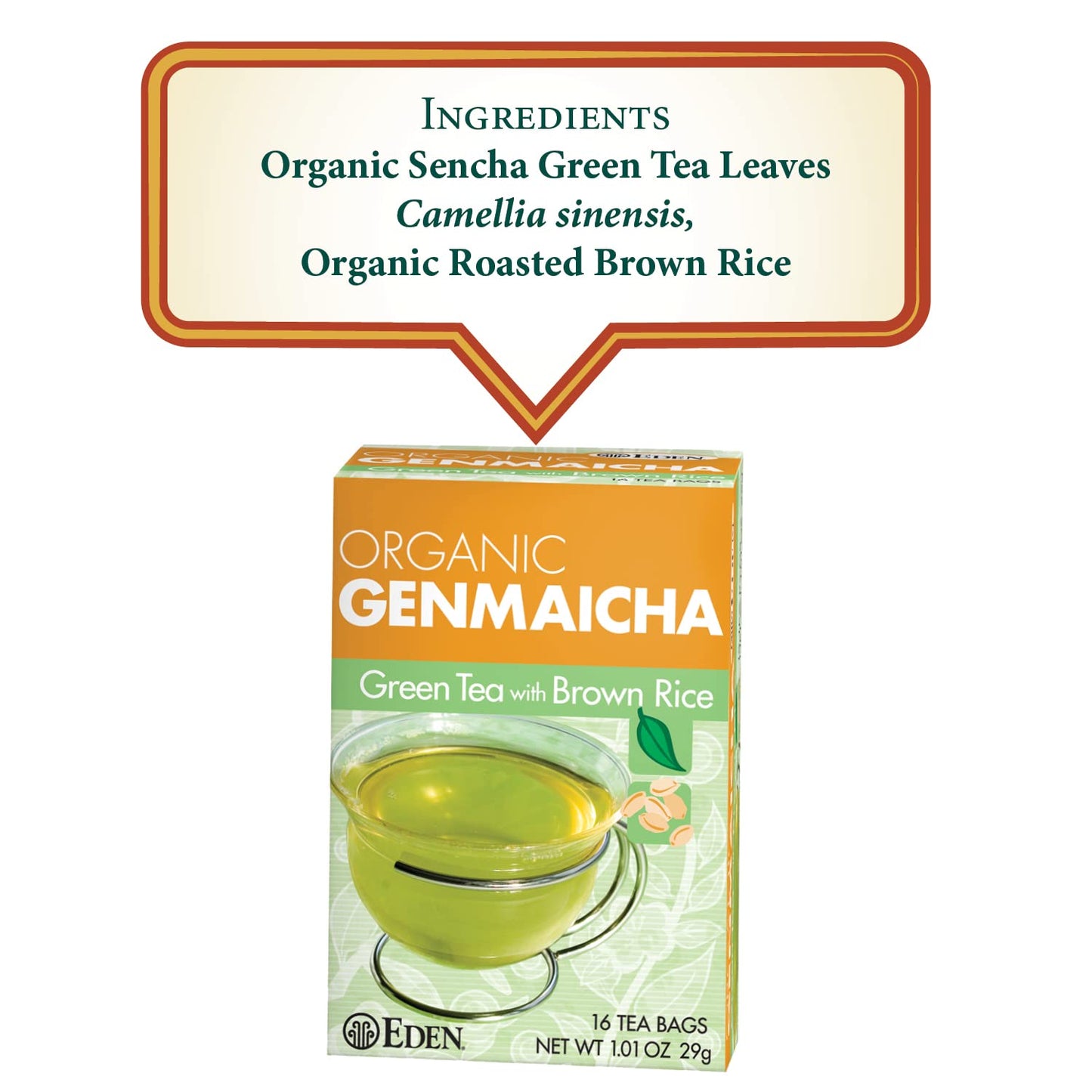
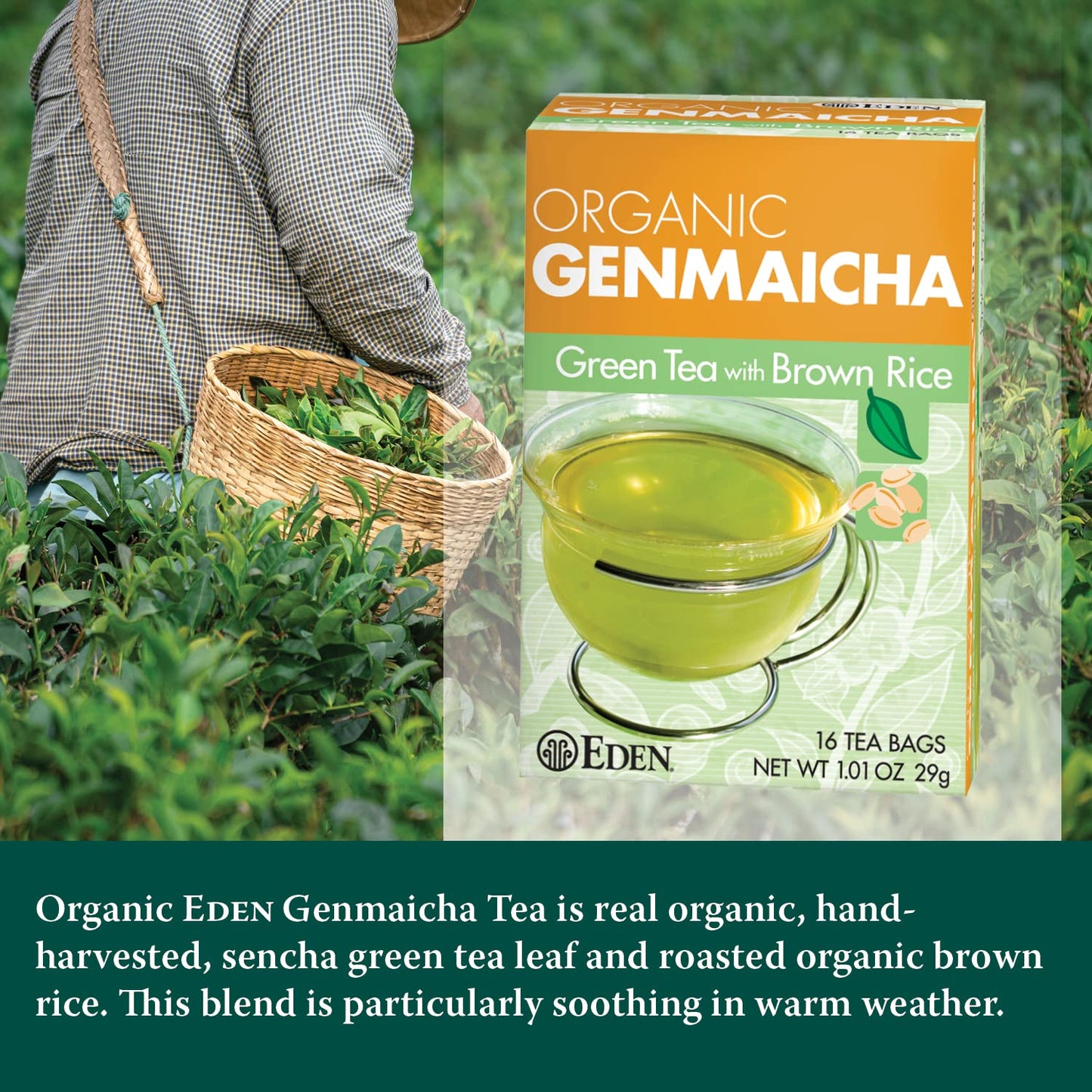
Eden Genmaicha Organic Green Tea is highest grade, hand-picked spring leaf sencha with roasted organic short grain brown rice. Genmai is brown rice, cha is tea. A rich, soothing, appealing tea. Grown on centuries-old plantations near Uji, Japan by Nagata Co-op artisans using traditional, strict organic growing and handling methods. Uji is famous for mineral rich, slightly acidic soil that tea plants thrive on. Respectfully referred to as Uji-cha. Uji River morning mist moistens and shields the leaves from morning sun. Superb Genmaicha Tea with rich, smooth, invigorating taste. The slowly roasted short grain brown rice is authentic-organic. It enrichens and smooths the green tea’s taste. Tea bushes are shaded with netting or traditional bamboo screens to protect new leaf growth from harsh sun. Most commonly, the first spring leaves are used to make Gyokuro and ceremonial grade Matcha, two of Japan’s most highly honored teas, but at the Nagata Co-op these prized first leaves are also used to make Eden Genmaicha Green Tea. The Nagata Co-op maintains rich soil, replenished with vegetal compost; never with animal waste, chemical fertilizers, herbicides, fungicides, or pesticides. Forty-five years ago, they completely rejected chemical agriculture.