


You will not be allowed to compare more than 4 products at a time
View compareFood To Live Organic Millet Flour, 8 Pounds Non-Gmo, Kosher, Vegan, Stone Ground, Unbleached, Unbromated, Bulk, Product Of The Usa
Food To Live Organic Millet Flour, 8 Pounds Non-Gmo, Kosher, Vegan, Stone Ground, Unbleached, Unbromated, Bulk, Product Of The Usa
Out of stock
Regular price
$53.43
Sale price
$53.43
Regular price
$76.33
Unit price
per
Shipping calculated at checkout.
Sold by GroceryeShop — Fresh & quality products, delivered in USA.
Returns accepted within 30 days | support@groceryeshop.us
Shipping Information
- Free Standard Shipping — United States only
- Processing Time: 3–5 business days
- Estimated Delivery: 6–10 business days after dispatch
- Securely packed to ensure your purchase arrives in perfect condition
- Tracking number sent via email once dispatched
- Orders over $250 require signature upon delivery. Taxes calculated at checkout.
Returns & Refund
Returns accepted within 30 days of delivery.
Damaged or Defective Item
Free return shipping + replacement or full refund
Wrong Item Received
Free return shipping + replacement or full refund
Change of Mind
Return shipping at customer's expense · Item must be unused & in original packaging
All returns require a Return Authorization (RA) number before sending.
View Full Return & Refund Policy
Safety & Compliance
⚠️
California Proposition 65 Warning
Some products sold on this website may expose you to chemicals known to the State of California to cause cancer, birth defects, or other reproductive harm.
www.P65Warnings.ca.gov
🛒
General Product Safety Advisory
Always read the product label, instructions, and safety warnings before use. Do not use damaged or modified products. Store products in appropriate conditions as specified by the manufacturer.
Keep all products out of reach of children unless specifically designed for their use.
ℹ️
Product Authenticity & Notice
All products sold by GroceryeShop are 100% authentic, sourced directly from trusted suppliers across the USA. Product weights and packaging may vary slightly from images due to seasonal availability and supplier updates.
GroceryeShop — Fresh, Quality Groceries Delivered Nationwide.
Couldn't load pickup availability
Guarantee safe and secure checkout


Product Description
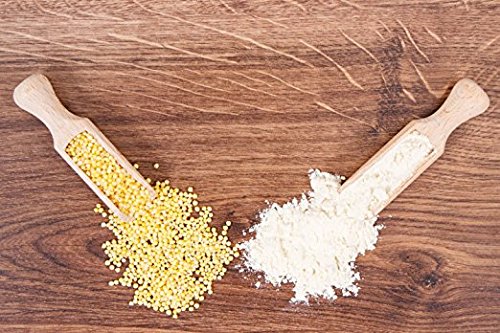
Enjoy baking even more with the help of Organic Millet Flour. It will add more flavor and texture to your bread, muffins, and cookies. It’s naturally gluten-free and can be a great addition to various flour mixes.
Stone-ground hulled millet makes Organic Millet Flour, and it means that this flour retains a lot of the precious nutrients. Millet is rich in calcium, iron, and B vitamins by nature. It’s also high in protein and fiber.
People suffering from thyroid issues might want to consider and consult a family doctor before consuming millet daily. There is always a way to include it in your meal plan safely.
How to Bake with Organic Millet Flour
You can add millet flour to any gluten-free flour mix. Play around with ratios to test how it works for your recipes. Millet flour adds texture to dough and works well with sorghum flour, in particular.
Millet has a mildly-nutty and buttery flavor, which is enhanced by heating. Therefore, it will add a pleasant taste to all your baked goods.
If you don’t require flour to be gluten-free, you can mix millet with regular all-purpose flour, though be prepared to make some adjustments to the recipe as this product coarser and has more of a meal-type texture.
When using with all-purpose flour, replace ½ cup of it in the recipe with millet flour. It will result in the volume of the final baked product going down by 15% to 20%, so don’t be alarmed, the texture of the product itself will be crumbly and lovely.
Note that you also shouldn’t use more than 20% of millet flour in flour mixes for muffins, it might give your treats a slightly starchy taste.
You can also sprinkle millet flour on bread and buns before baking to make a more delicious golden crust.
Stone-ground hulled millet makes Organic Millet Flour, and it means that this flour retains a lot of the precious nutrients. Millet is rich in calcium, iron, and B vitamins by nature. It’s also high in protein and fiber.
People suffering from thyroid issues might want to consider and consult a family doctor before consuming millet daily. There is always a way to include it in your meal plan safely.
How to Bake with Organic Millet Flour
You can add millet flour to any gluten-free flour mix. Play around with ratios to test how it works for your recipes. Millet flour adds texture to dough and works well with sorghum flour, in particular.
Millet has a mildly-nutty and buttery flavor, which is enhanced by heating. Therefore, it will add a pleasant taste to all your baked goods.
If you don’t require flour to be gluten-free, you can mix millet with regular all-purpose flour, though be prepared to make some adjustments to the recipe as this product coarser and has more of a meal-type texture.
When using with all-purpose flour, replace ½ cup of it in the recipe with millet flour. It will result in the volume of the final baked product going down by 15% to 20%, so don’t be alarmed, the texture of the product itself will be crumbly and lovely.
Note that you also shouldn’t use more than 20% of millet flour in flour mixes for muffins, it might give your treats a slightly starchy taste.
You can also sprinkle millet flour on bread and buns before baking to make a more delicious golden crust.
Frequently Asked Questions
- Q: What is the size of the Food to Live Organic Millet Flour? A: The Food to Live Organic Millet Flour comes in a size of one hundred twenty-eight ounces, which is eight pounds.
- Q: Is this flour gluten-free? A: Yes, the Food to Live Organic Millet Flour is gluten-free, making it safe for individuals with gluten sensitivities.
- Q: What are the key ingredients in this flour? A: The key ingredient in the Food to Live Organic Millet Flour is stone-ground hulled millet, which retains essential nutrients.
- Q: How do I bake with Organic Millet Flour? A: You can replace a small portion of all-purpose flour with Organic Millet Flour to enhance texture and flavor in your baked goods.
- Q: Is this flour suitable for gluten-free baking? A: Yes, Organic Millet Flour is ideal for gluten-free baking and can be combined with other flour mixes.
- Q: Can I use this flour for non-gluten-free recipes? A: Yes, you can use Organic Millet Flour in non-gluten-free recipes by mixing it with regular all-purpose flour.
- Q: How should I store Organic Millet Flour? A: Store Organic Millet Flour in a cool, dry place in an airtight container to maintain its freshness and quality.
- Q: Does Organic Millet Flour have a shelf life? A: Yes, Organic Millet Flour typically has a shelf life of about one year when stored properly.
- Q: How do I keep this flour safe from pests? A: To keep Organic Millet Flour safe from pests, ensure it is sealed tightly in an airtight container.
- Q: Is this flour safe for people with thyroid issues? A: Consult with a family doctor before consuming millet, as those with thyroid issues may need to be cautious.
- Q: How does Organic Millet Flour compare to other gluten-free flours? A: Organic Millet Flour offers a unique nutty and buttery flavor, setting it apart from other gluten-free flours.
- Q: Can I use Organic Millet Flour for bread making? A: Yes, Organic Millet Flour can be used in bread making, but replace no more than twenty percent of the all-purpose flour.
- Q: What makes Organic Millet Flour high in nutrients? A: Organic Millet Flour is high in protein, fiber, calcium, iron, and B vitamins, due to its stone-ground processing.
- Q: Should I adjust my recipes when using millet flour? A: Yes, when using millet flour, you may need to adjust your recipes to account for its coarser texture.
- Q: What is the flavor profile of Organic Millet Flour? A: Organic Millet Flour has a mildly nutty and buttery flavor that enhances the taste of baked goods.