


You will not be allowed to compare more than 4 products at a time
View compareFood To Live - Whole Coriander Seeds, 12 Ounces - Non-Gmo Verified, Dried Cilantro Seeds, Vegan, Kosher, Bulk. Rich In Antioxida
Food To Live - Whole Coriander Seeds, 12 Ounces - Non-Gmo Verified, Dried Cilantro Seeds, Vegan, Kosher, Bulk. Rich In Antioxida
Out of stock
Regular price
$15.25
Sale price
$15.25
Regular price
$21.79
Unit price
per
Shipping calculated at checkout.
Sold by GroceryeShop — Fresh & quality products, delivered in USA.
Returns accepted within 30 days | support@groceryeshop.us
Shipping Information
- Free Standard Shipping — United States only
- Processing Time: 3–5 business days
- Estimated Delivery: 6–10 business days after dispatch
- Securely packed to ensure your purchase arrives in perfect condition
- Tracking number sent via email once dispatched
- Orders over $250 require signature upon delivery. Taxes calculated at checkout.
Returns & Refund
Returns accepted within 30 days of delivery.
Damaged or Defective Item
Free return shipping + replacement or full refund
Wrong Item Received
Free return shipping + replacement or full refund
Change of Mind
Return shipping at customer's expense · Item must be unused & in original packaging
All returns require a Return Authorization (RA) number before sending.
View Full Return & Refund Policy
Safety & Compliance
⚠️
California Proposition 65 Warning
Some products sold on this website may expose you to chemicals known to the State of California to cause cancer, birth defects, or other reproductive harm.
www.P65Warnings.ca.gov
🛒
General Product Safety Advisory
Always read the product label, instructions, and safety warnings before use. Do not use damaged or modified products. Store products in appropriate conditions as specified by the manufacturer.
Keep all products out of reach of children unless specifically designed for their use.
ℹ️
Product Authenticity & Notice
All products sold by GroceryeShop are 100% authentic, sourced directly from trusted suppliers across the USA. Product weights and packaging may vary slightly from images due to seasonal availability and supplier updates.
GroceryeShop — Fresh, Quality Groceries Delivered Nationwide.
Couldn't load pickup availability
Guarantee safe and secure checkout


Product Description
Coriander (Coriandrum Sativum) Is Also Known As Cilantro, Chinese Parsley Or Dhania. Coriander Is Common In South Asian, Southeast Asian, Middle Eastern, Central Asian, Mediterranean, Indian, Tex-Mex, Latin American, Portuguese, Chinese, African, And Scandinavian Cuisine. The Seeds Have A Lemony Citrus Flavour When Crushed, Due To Terpenes Linalool And Pinene. It Is Described As Warm, Nutty, Spicy, And Orange-Flavoured. Coriander Seed Is A Spice In Garam Masala And Indian Curries, Which Often Employ The Ground Fruits In Generous Amounts Together With Cumin. It Acts As A Thickener. Roasted Coriander Seeds, Called Dhana Dal, Are Eaten As A Snack. It Is The Main Ingredient Of The Two South Indian Dishes: Sambhar And Rasam. Coriander Seed Is Good For Pickling Vegetables, And Making Sausages In Germany And South Africa. In Ukraine And Central Europe, Coriander Seed Is An Occasional Ingredient In Rye Bread As An Alternative To Caraway. The Zuni People Have Adapted It Into Their Cuisine, Mixing The Powdered Seeds Ground With Chile And Using It A Condiment With Meat, And Eating Leaves As A Salad.
Frequently Asked Questions
- Q: What are the main ingredients in Food to Live Whole Coriander Seeds? A: The main ingredient is whole coriander seeds, which are non-GMO verified and 100% natural.
- Q: How much does the package of coriander seeds weigh? A: The package weighs twelve ounces, providing a generous supply for various culinary uses.
- Q: Are the coriander seeds vegan and kosher? A: Yes, the coriander seeds are both vegan and kosher, making them suitable for various dietary preferences.
- Q: How can I use coriander seeds in cooking? A: You can use coriander seeds by grinding them to add a citrusy aroma and warm flavor to curries, soups, and sauces.
- Q: What dishes benefit from the use of coriander seeds? A: Coriander seeds enhance the flavor of Indian curries, Tex-Mex dishes, and Mediterranean meals, among others.
- Q: Can I use coriander seeds as a spice in pickling? A: Yes, coriander seeds are excellent for pickling vegetables, adding a unique flavor to your pickles.
- Q: How should I store coriander seeds for freshness? A: Store coriander seeds in a cool, dry place in their airtight ziplock bag to maintain freshness and flavor.
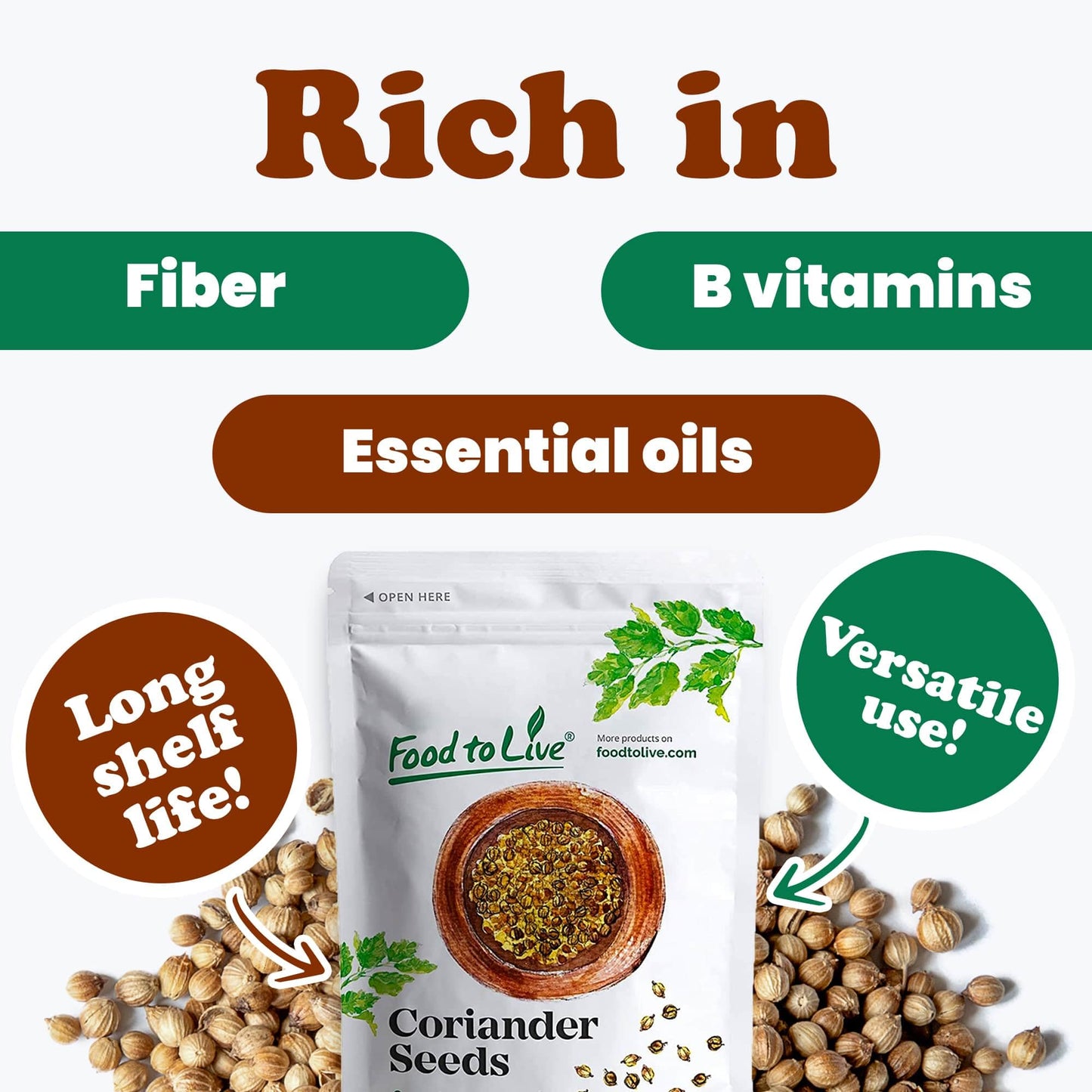
- Q: What is the shelf life of coriander seeds? A: When stored properly, coriander seeds can maintain their flavor for up to two to three years.
- Q: Are there any allergens in Food to Live Whole Coriander Seeds? A: No, the product does not contain common allergens, making it safe for most dietary needs.
- Q: How do I know if coriander seeds are fresh? A: Fresh coriander seeds should have a strong aroma and vibrant color. If they lack scent, they may be stale.
- Q: Can coriander seeds be used in baking? A: Yes, coriander seeds can be used in baking, particularly in rye bread for a unique flavor.
- Q: Is there a difference between whole and ground coriander? A: Yes, whole coriander seeds have a more robust flavor that is released when ground, while ground coriander offers convenience.
- Q: What culinary cuisines commonly use coriander seeds? A: Coriander seeds are widely used in South Asian, Middle Eastern, Mediterranean, and Latin American cuisines.
- Q: What are the health benefits of coriander seeds? A: Coriander seeds are rich in antioxidants and contain essential minerals like iron, calcium, and zinc.
- Q: How do I return the product if I'm not satisfied? A: If you're not satisfied, you can return the product according to the seller's return policy within the specified timeframe.