


You will not be allowed to compare more than 4 products at a time
View comparePaccheri Organic Italian Pasta di Gragnano I.G.P.| Pastai Gragnanesi | USDA Certified Organic| 17.6oz (500g)
Paccheri Organic Italian Pasta di Gragnano I.G.P.| Pastai Gragnanesi | USDA Certified Organic| 17.6oz (500g)
Out of stock
Regular price
$17.04
Sale price
$17.04
Regular price
$24.34
Unit price
per
Shipping calculated at checkout.
Sold by GroceryeShop — Fresh & quality products, delivered in USA.
Returns accepted within 30 days | support@groceryeshop.us
Shipping Information
- Free Standard Shipping — United States only
- Processing Time: 3–5 business days
- Estimated Delivery: 6–10 business days after dispatch
- Securely packed to ensure your purchase arrives in perfect condition
- Tracking number sent via email once dispatched
- Orders over $250 require signature upon delivery. Taxes calculated at checkout.
Returns & Refund
Returns accepted within 30 days of delivery.
Damaged or Defective Item
Free return shipping + replacement or full refund
Wrong Item Received
Free return shipping + replacement or full refund
Change of Mind
Return shipping at customer's expense · Item must be unused & in original packaging
All returns require a Return Authorization (RA) number before sending.
View Full Return & Refund Policy
Safety & Compliance
⚠️
California Proposition 65 Warning
Some products sold on this website may expose you to chemicals known to the State of California to cause cancer, birth defects, or other reproductive harm.
www.P65Warnings.ca.gov
🛒
General Product Safety Advisory
Always read the product label, instructions, and safety warnings before use. Do not use damaged or modified products. Store products in appropriate conditions as specified by the manufacturer.
Keep all products out of reach of children unless specifically designed for their use.
ℹ️
Product Authenticity & Notice
All products sold by GroceryeShop are 100% authentic, sourced directly from trusted suppliers across the USA. Product weights and packaging may vary slightly from images due to seasonal availability and supplier updates.
GroceryeShop — Fresh, Quality Groceries Delivered Nationwide.
Couldn't load pickup availability
Guarantee safe and secure checkout


Product Description
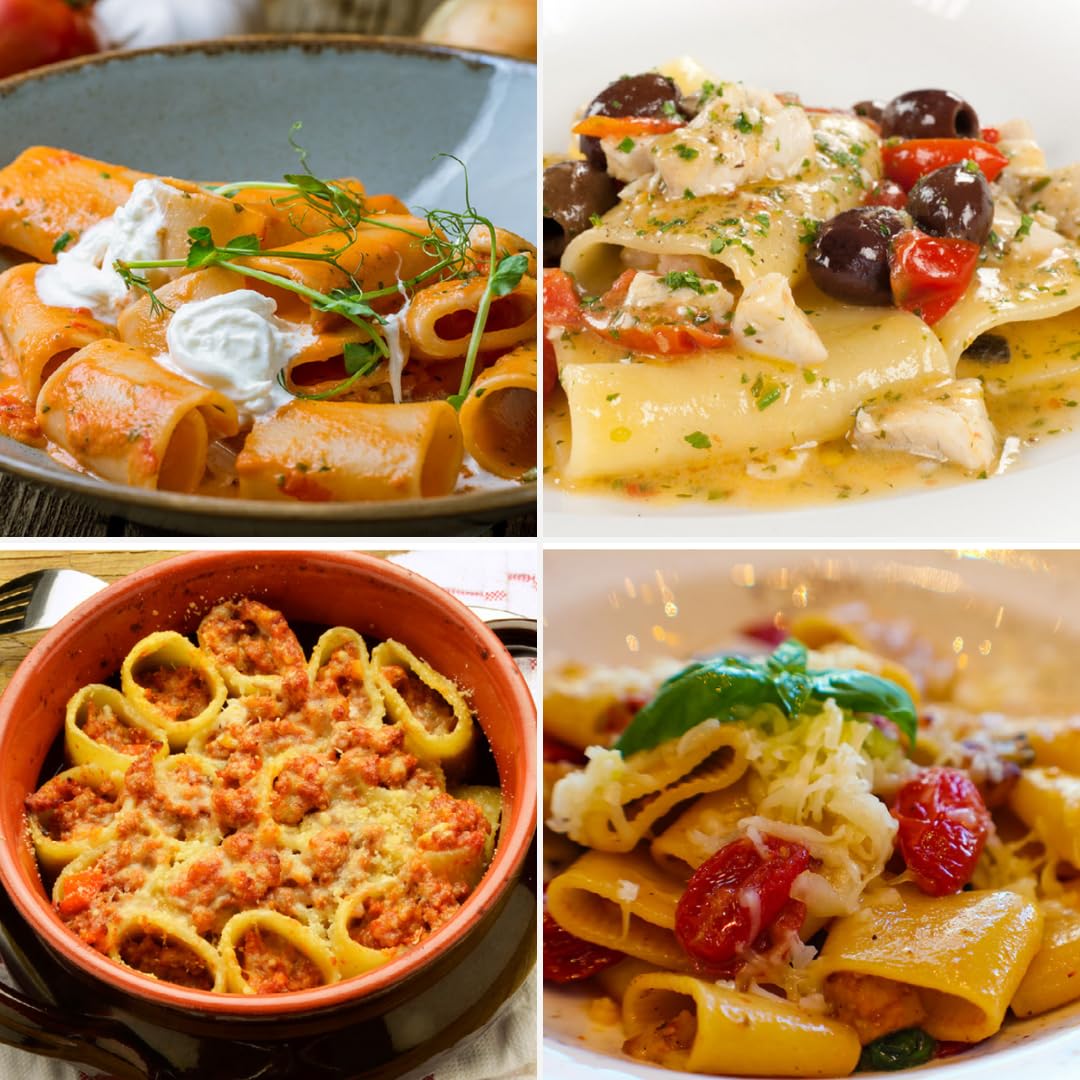
Cooking Suggestion: They are a great success in timbales with meat sauce or with cheese and aubergines filling. The Pasta di Gragnano should be cooked ''al dente'', which means only to the point at which the pasta is still firm, then added to the sauce where it will cook a little more. Afterwards it is served right off the stove. The Paccheri Pasta has a straight cut and a diameter of 30 mm. The origin of this shape refers to the Neapolitan word ''pacchero'' or slap. The name could refer to the slapping sound that it makes when cooking with sauce or to the excellence of this shape, that can stun you like a ''pacchero''. This cut is originated from Campania or Calabria, Italy.
Frequently Asked Questions
- Q: What ingredients are in the Paccheri Organic Italian Pasta? A: The Paccheri Pasta contains durum wheat semolina from Italian organic farming and water. It is USDA Certified Organic and I.G.P. Protected.
- Q: How large is the Paccheri Pasta package? A: The package contains seventeen point six ounces, or five hundred grams, of pasta. It is a single pack size.
- Q: What is the shape and size of the Paccheri Pasta? A: The Paccheri has a straight cut with a diameter of thirty millimeters. This large internal cavity is designed to hold sauces.
- Q: How should I cook the Paccheri Pasta? A: To cook Paccheri Pasta, boil it until it is 'al dente,' which means firm to the bite. Then combine it with your sauce for a little additional cooking.
- Q: What sauces pair well with Paccheri Pasta? A: Paccheri Pasta pairs well with meat sauces, cheese, and vegetable fillings. Its design is also ideal for gathering mussel and fish sauces.
- Q: Is Paccheri Pasta suitable for a vegan diet? A: Yes, the ingredients in Paccheri Pasta are plant-based, making it suitable for a vegan diet. It contains no animal products.
- Q: How should I store the Paccheri Pasta? A: Store Paccheri Pasta in a cool, dry place. Ensure the package is sealed to maintain freshness and prevent moisture.
- Q: What is the shelf life of Paccheri Pasta? A: The shelf life of Paccheri Pasta is typically up to two years when stored correctly. Always check the package for specific expiration dates.
- Q: Can I freeze Paccheri Pasta? A: No, it is not recommended to freeze dry pasta like Paccheri. It’s best stored in its original packaging in a pantry.
- Q: Is this pasta gluten-free? A: No, Paccheri Pasta contains durum wheat semolina, which is not gluten-free. It is not suitable for those with gluten intolerance.
- Q: What makes Pastai Gragnanesi pasta unique? A: Pastai Gragnanesi pasta is unique due to its high-quality durum wheat and traditional production methods, including bronze drawing and slow drying.
- Q: How does the taste of Paccheri Pasta compare to other pasta? A: Paccheri Pasta has a rich, authentic taste due to its high-quality organic ingredients. Its unique shape enhances the flavor of sauces.
- Q: Is this pasta made in Italy? A: Yes, Paccheri Pasta is imported from Gragnano, Italy, known for its exceptional pasta production.
- Q: What cooking equipment do I need for Paccheri Pasta? A: You will need a large pot for boiling water and a colander for draining the pasta after cooking.
- Q: Can I cook Paccheri Pasta in a microwave? A: It is not recommended to cook Paccheri Pasta in a microwave. Stovetop boiling yields better texture and flavor.