


You will not be allowed to compare more than 4 products at a time
View compareRani Chapati Flour (100% Pure Whole Wheat Atta), For Making Roti & Indian Breads 128Oz (8Lbs) 3.63Kg Bulk ~ All Natural | Vegan
Rani Chapati Flour (100% Pure Whole Wheat Atta), For Making Roti & Indian Breads 128Oz (8Lbs) 3.63Kg Bulk ~ All Natural | Vegan
Out of stock
Regular price
$27.62
Sale price
$27.62
Regular price
$39.46
Unit price
per
Shipping calculated at checkout.
Sold by GroceryeShop — Fresh & quality products, delivered in USA.
Returns accepted within 30 days | support@groceryeshop.us
Shipping Information
- Free Standard Shipping — United States only
- Processing Time: 3–5 business days
- Estimated Delivery: 6–10 business days after dispatch
- Securely packed to ensure your purchase arrives in perfect condition
- Tracking number sent via email once dispatched
- Orders over $250 require signature upon delivery. Taxes calculated at checkout.
Returns & Refund
Returns accepted within 30 days of delivery.
Damaged or Defective Item
Free return shipping + replacement or full refund
Wrong Item Received
Free return shipping + replacement or full refund
Change of Mind
Return shipping at customer's expense · Item must be unused & in original packaging
All returns require a Return Authorization (RA) number before sending.
View Full Return & Refund Policy
Safety & Compliance
⚠️
California Proposition 65 Warning
Some products sold on this website may expose you to chemicals known to the State of California to cause cancer, birth defects, or other reproductive harm.
www.P65Warnings.ca.gov
🛒
General Product Safety Advisory
Always read the product label, instructions, and safety warnings before use. Do not use damaged or modified products. Store products in appropriate conditions as specified by the manufacturer.
Keep all products out of reach of children unless specifically designed for their use.
ℹ️
Product Authenticity & Notice
All products sold by GroceryeShop are 100% authentic, sourced directly from trusted suppliers across the USA. Product weights and packaging may vary slightly from images due to seasonal availability and supplier updates.
GroceryeShop — Fresh, Quality Groceries Delivered Nationwide.
Couldn't load pickup availability
Guarantee safe and secure checkout


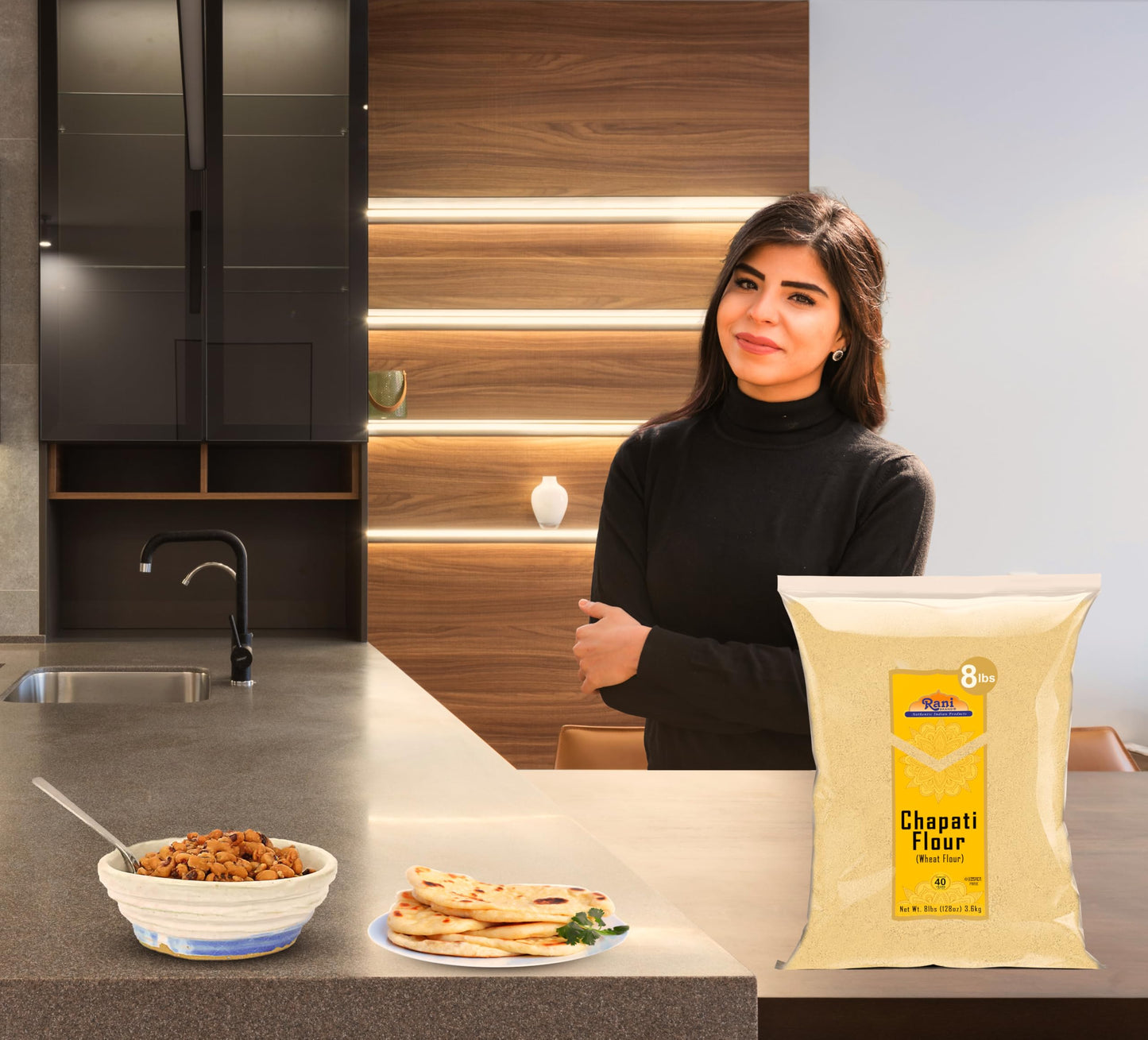
Product Description
Atta Is A Whole Wheat Flour That Is Made From Durum Wheat. Is The Perfect Flour To Use When Making Roti (The Indian ''Tortilla'', As Well As Other Doughs Like Chappati, Paratha And Puri. It Is Ground In Stone Mills Called Chakki And Has An Authentic Taste And Texture. It Is A Basic In Many Homes, But There Are So Many Different Brands On The Market That It Can Be Difficult To Choose Which Might Be The Best For You And Your Family. Some Are Organic, Some Are Gluten Free, And Some Contain Extra Ingredients. Different Ingredients And Textures Can Create Slightly Different Rotis, So It Is Important To Know What You Are Buying.
Frequently Asked Questions
- Q: What is Rani Chapati Flour made of? A: Rani Chapati Flour is made of one hundred percent pure whole wheat. It is derived from durum wheat, ground in traditional stone mills to preserve its authentic taste.
- Q: What is the size of the Rani Chapati Flour package? A: The package contains one hundred twenty-eight ounces, or eight pounds, of flour. This bulk size is ideal for families or frequent cooking.
- Q: Is Rani Chapati Flour gluten-free? A: No, Rani Chapati Flour is not gluten-free. It is made from whole wheat, which naturally contains gluten, making it unsuitable for those with gluten sensitivities.
- Q: How do I use Rani Chapati Flour for making roti? A: To use Rani Chapati Flour for roti, mix the flour with water to form a soft dough. Then, roll it into thin circles and cook on a hot griddle until puffed and cooked through.
- Q: Can I use Rani Chapati Flour for baking bread? A: Yes, Rani Chapati Flour can be used for baking various Indian breads. It is perfect for making roti, chappati, puri, and parathas.
- Q: Is Rani Chapati Flour suitable for beginners? A: Yes, Rani Chapati Flour is suitable for beginners. Its ease of use makes it a great choice for anyone looking to make traditional Indian bread for the first time.
- Q: How should I store Rani Chapati Flour? A: Store Rani Chapati Flour in a cool, dry place, preferably in an airtight container. This helps to maintain its freshness and prevents moisture absorption.
- Q: What is the shelf life of Rani Chapati Flour? A: Rani Chapati Flour has a shelf life of approximately twelve months when stored properly. Always check the packaging for specific expiration dates.
- Q: Is Rani Chapati Flour vegan? A: Yes, Rani Chapati Flour is vegan. It contains no animal products and is made entirely from whole wheat.
- Q: Can I use Rani Chapati Flour for gluten-free recipes? A: No, Rani Chapati Flour cannot be used for gluten-free recipes. It is made from wheat and contains gluten, making it unsuitable for gluten-free diets.
- Q: How does Rani Chapati Flour compare to all-purpose flour? A: Rani Chapati Flour is specifically designed for making Indian breads, whereas all-purpose flour can be used for a wider range of baking. Chapati flour has a coarser texture and richer flavor.
- Q: What if Rani Chapati Flour arrives damaged? A: If Rani Chapati Flour arrives damaged, contact the seller for a replacement or refund. Most retailers have a return policy for damaged goods.
- Q: Are there any preservatives in Rani Chapati Flour? A: No, Rani Chapati Flour contains no preservatives. It is made from all-natural ingredients, ensuring a pure and wholesome product.
- Q: Is Rani Chapati Flour Kosher certified? A: Yes, Rani Chapati Flour is Kosher certified. It meets the dietary requirements for those observing Kosher guidelines.
- Q: Can I use Rani Chapati Flour for making pizza dough? A: While Rani Chapati Flour can be used to make pizza dough, it may yield a different texture compared to traditional pizza flour. It works best for Indian breads.