


You will not be allowed to compare more than 4 products at a time
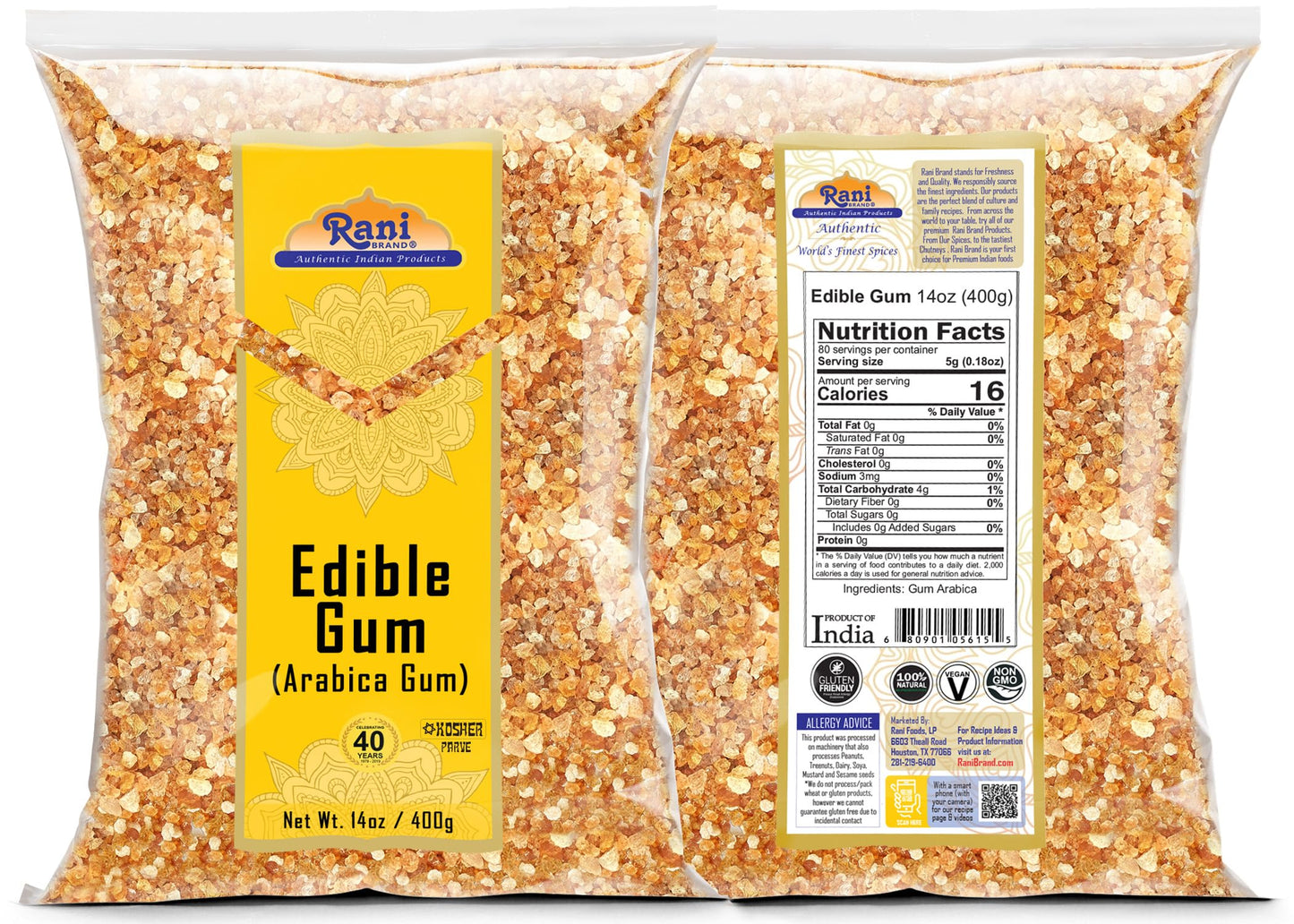
View compareRani Edible Gum Whole (Arabica Gum) 14Oz (400G) Bulk ~ All Natural, Salt-Free | Vegan | No Colors | Gluten Friendly | Non-Gmo | Kosher | Indian Origin
Rani Edible Gum Whole (Arabica Gum) 14Oz (400G) Bulk ~ All Natural, Salt-Free | Vegan | No Colors | Gluten Friendly | Non-Gmo | Kosher | Indian Origin
Out of stock
Regular price
$27.62
Sale price
$27.62
Regular price
$39.46
Unit price
per
Shipping calculated at checkout.
Sold by GroceryeShop — Fresh & quality products, delivered in USA.
Returns accepted within 30 days | support@groceryeshop.us
Shipping Information
- Free Standard Shipping — United States only
- Processing Time: 3–5 business days
- Estimated Delivery: 6–10 business days after dispatch
- Securely packed to ensure your purchase arrives in perfect condition
- Tracking number sent via email once dispatched
- Orders over $250 require signature upon delivery. Taxes calculated at checkout.
Returns & Refund
Returns accepted within 30 days of delivery.
Damaged or Defective Item
Free return shipping + replacement or full refund
Wrong Item Received
Free return shipping + replacement or full refund
Change of Mind
Return shipping at customer's expense · Item must be unused & in original packaging
All returns require a Return Authorization (RA) number before sending.
View Full Return & Refund Policy
Safety & Compliance
⚠️
California Proposition 65 Warning
Some products sold on this website may expose you to chemicals known to the State of California to cause cancer, birth defects, or other reproductive harm.
www.P65Warnings.ca.gov
🛒
General Product Safety Advisory
Always read the product label, instructions, and safety warnings before use. Do not use damaged or modified products. Store products in appropriate conditions as specified by the manufacturer.
Keep all products out of reach of children unless specifically designed for their use.
ℹ️
Product Authenticity & Notice
All products sold by GroceryeShop are 100% authentic, sourced directly from trusted suppliers across the USA. Product weights and packaging may vary slightly from images due to seasonal availability and supplier updates.
GroceryeShop — Fresh, Quality Groceries Delivered Nationwide.
Couldn't load pickup availability
Guarantee safe and secure checkout


Product Description
[SPECIAL NOTE] This is NOT chewing gum in any form! It is used in cooking, herbal & personal care.
Gum arabic, also known as acacia gum, is a natural gum consisting of the hardened sap of various species of the acacia tree. Gum arabic is a complex mixture of glycoproteins and polysaccharides. It is the original source of the sugars arabinose and ribose, both of which were first discovered and isolated from it, and are named after it. Gum arabic is soluble in water. It used primarily in the food industry as a stabilizer. It is edible and has E number E414. Gum arabic is a key ingredient in traditional lithography and is used in printing, paint production, glue, cosmetics and various industrial applications, including viscosity control in inks and in textile industries, though less expensive materials compete with it for many of these roles. While gum arabic is now produced throughout the African Sahel, it is still harvested and used in the Middle East. For example, Arab populations use the natural gum to make a chilled, sweetened, and flavored gelato-like dessert.
Gum arabic, also known as acacia gum, is a natural gum consisting of the hardened sap of various species of the acacia tree. Gum arabic is a complex mixture of glycoproteins and polysaccharides. It is the original source of the sugars arabinose and ribose, both of which were first discovered and isolated from it, and are named after it. Gum arabic is soluble in water. It used primarily in the food industry as a stabilizer. It is edible and has E number E414. Gum arabic is a key ingredient in traditional lithography and is used in printing, paint production, glue, cosmetics and various industrial applications, including viscosity control in inks and in textile industries, though less expensive materials compete with it for many of these roles. While gum arabic is now produced throughout the African Sahel, it is still harvested and used in the Middle East. For example, Arab populations use the natural gum to make a chilled, sweetened, and flavored gelato-like dessert.
Frequently Asked Questions
- Q: What is Rani Edible Gum made of? A: Rani Edible Gum is made from natural arabica gum, also known as acacia gum. This product is a complex mixture of glycoproteins and polysaccharides derived from the hardened sap of acacia trees.
- Q: What is the weight of Rani Edible Gum? A: The weight of Rani Edible Gum is fourteen ounces, which is approximately four hundred grams. This bulk packaging is ideal for cooking and various applications.
- Q: Is Rani Edible Gum gluten-free? A: Yes, Rani Edible Gum is gluten-friendly. It is suitable for those with gluten sensitivities or those following a gluten-free diet.
- Q: How can I use Rani Edible Gum? A: You can use Rani Edible Gum in cooking, herbal remedies, and personal care. It serves as a stabilizer in various recipes and can be incorporated into desserts.
- Q: Is Rani Edible Gum suitable for vegan diets? A: Yes, Rani Edible Gum is vegan. It contains no animal products, making it a great choice for those following a plant-based lifestyle.
- Q: Can I use Rani Edible Gum in desserts? A: Yes, you can use Rani Edible Gum in desserts. It is commonly used to create gelato-like desserts and can stabilize mixtures.
- Q: How should I store Rani Edible Gum? A: Store Rani Edible Gum in a cool, dry place away from direct sunlight. Proper storage helps maintain its quality and extend its shelf life.
- Q: What is the shelf life of Rani Edible Gum? A: The shelf life of Rani Edible Gum is typically long, especially when stored correctly. For optimal freshness, keep it sealed and away from moisture.
- Q: Is Rani Edible Gum safe for children? A: Yes, Rani Edible Gum is safe for children. However, it should not be used as chewing gum, as it serves other culinary purposes.
- Q: What are the uses of Rani Edible Gum in industry? A: Rani Edible Gum is used in various industries, including food, cosmetics, and printing. It acts as a stabilizer, thickener, and binding agent.
- Q: How does Rani Edible Gum compare to other gumming agents? A: Rani Edible Gum is preferred for its natural properties and versatility. Compared to synthetic gumming agents, it is healthier and more suitable for gourmet applications.
- Q: What if my Rani Edible Gum arrives damaged? A: If your Rani Edible Gum arrives damaged, contact customer support for assistance. They will guide you on the return process or provide a replacement.
- Q: Can I use Rani Edible Gum in herbal remedies? A: Yes, Rani Edible Gum can be used in herbal remedies. It is often included in formulations for its thickening and stabilizing properties.
- Q: Is Rani Edible Gum Kosher certified? A: Yes, Rani Edible Gum is Kosher certified. It meets Kosher dietary standards, making it suitable for those observing these dietary laws.
- Q: Does Rani Edible Gum contain preservatives? A: No, Rani Edible Gum does not contain preservatives. It is a natural product with no artificial additives, ensuring high quality.