


You will not be allowed to compare more than 4 products at a time
View compareRani Peanuts Skinless (Blanched, Uncooked) 28Oz (1.75Lbs) 800G ~ All Natural | Vegan | Gluten Friendly | Kosher | Fresh Product Of Usa ~ Spanish Grade Groundnuts
Rani Peanuts Skinless (Blanched, Uncooked) 28Oz (1.75Lbs) 800G ~ All Natural | Vegan | Gluten Friendly | Kosher | Fresh Product Of Usa ~ Spanish Grade Groundnuts
Out of stock
Regular price
$17.09
Sale price
$17.09
Regular price
$24.41
Unit price
per
Shipping calculated at checkout.
Sold by GroceryeShop — Fresh & quality products, delivered in USA.
Returns accepted within 30 days | support@groceryeshop.us
Shipping Information
- Free Standard Shipping — United States only
- Processing Time: 3–5 business days
- Estimated Delivery: 6–10 business days after dispatch
- Securely packed to ensure your purchase arrives in perfect condition
- Tracking number sent via email once dispatched
- Orders over $250 require signature upon delivery. Taxes calculated at checkout.
Returns & Refund
Returns accepted within 30 days of delivery.
Damaged or Defective Item
Free return shipping + replacement or full refund
Wrong Item Received
Free return shipping + replacement or full refund
Change of Mind
Return shipping at customer's expense · Item must be unused & in original packaging
All returns require a Return Authorization (RA) number before sending.
View Full Return & Refund Policy
Safety & Compliance
⚠️
California Proposition 65 Warning
Some products sold on this website may expose you to chemicals known to the State of California to cause cancer, birth defects, or other reproductive harm.
www.P65Warnings.ca.gov
🛒
General Product Safety Advisory
Always read the product label, instructions, and safety warnings before use. Do not use damaged or modified products. Store products in appropriate conditions as specified by the manufacturer.
Keep all products out of reach of children unless specifically designed for their use.
ℹ️
Product Authenticity & Notice
All products sold by GroceryeShop are 100% authentic, sourced directly from trusted suppliers across the USA. Product weights and packaging may vary slightly from images due to seasonal availability and supplier updates.
GroceryeShop — Fresh, Quality Groceries Delivered Nationwide.
Couldn't load pickup availability
Guarantee safe and secure checkout


Product Description
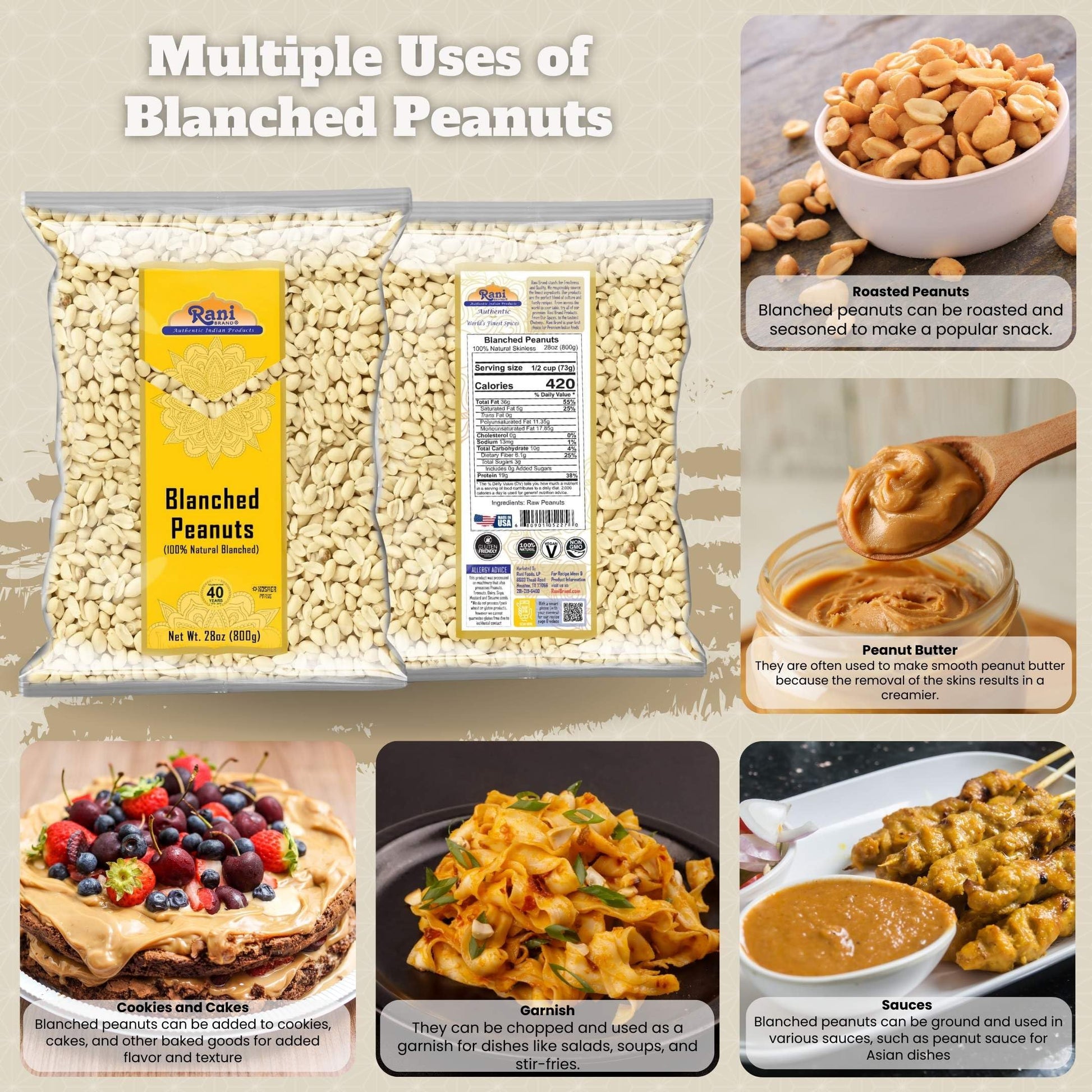
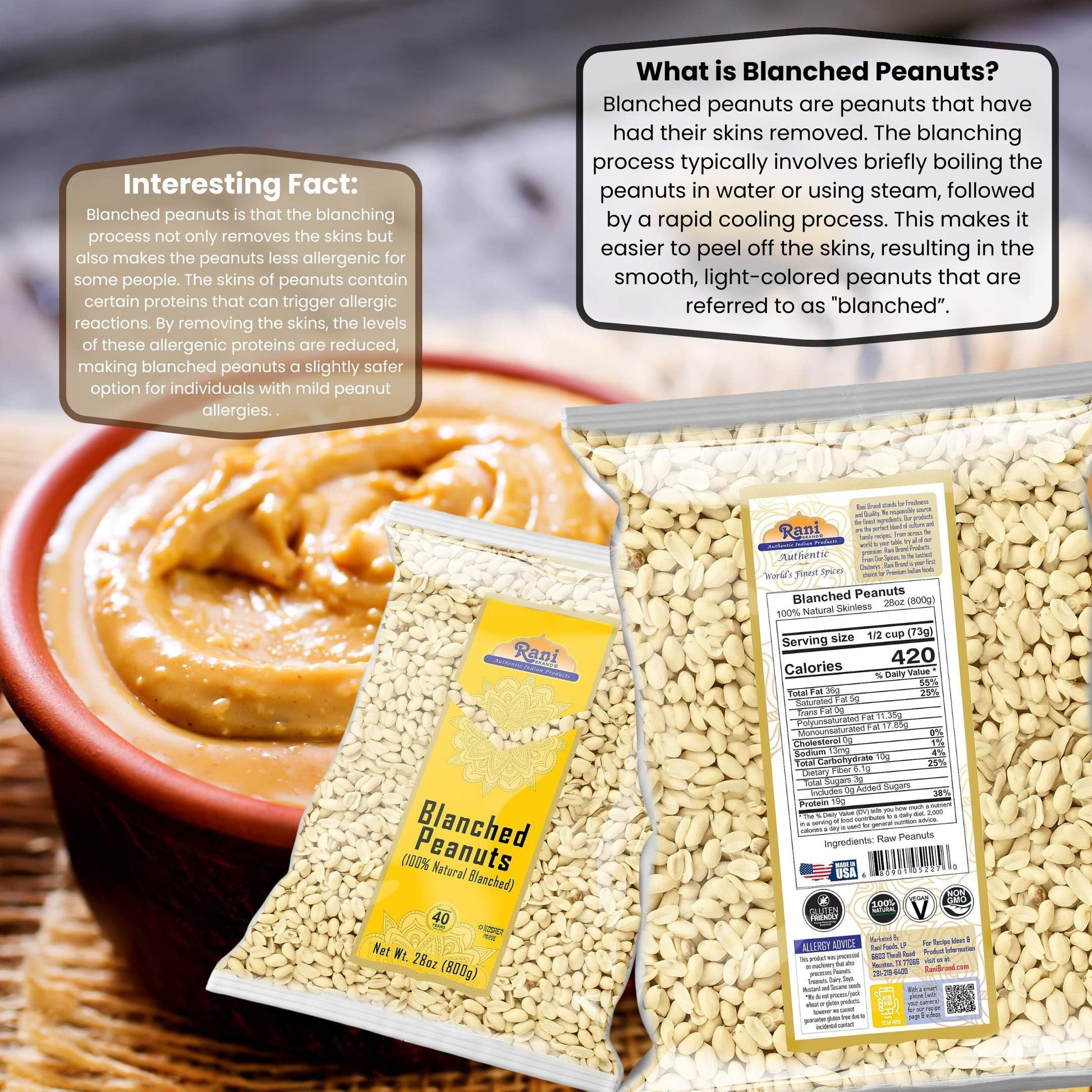
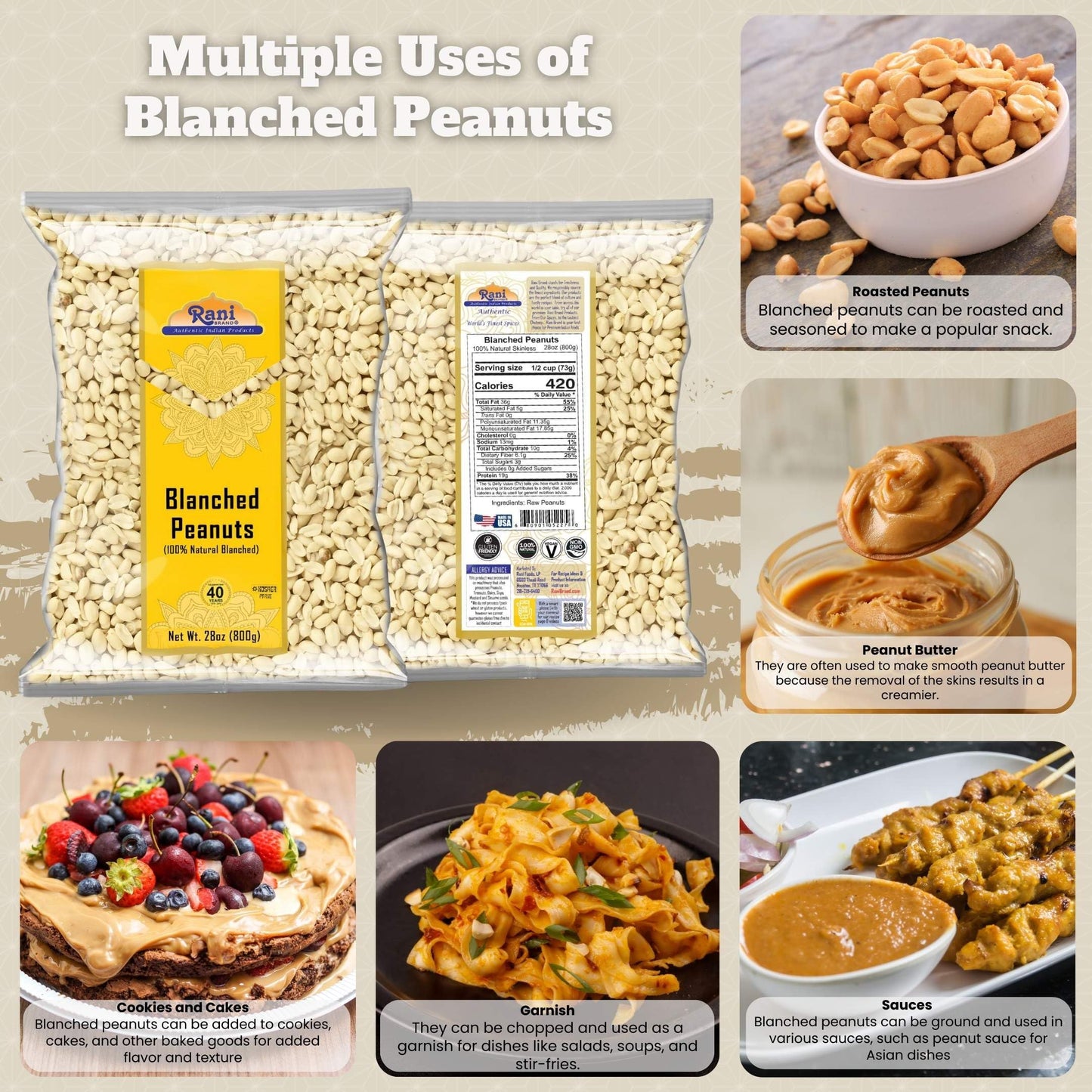
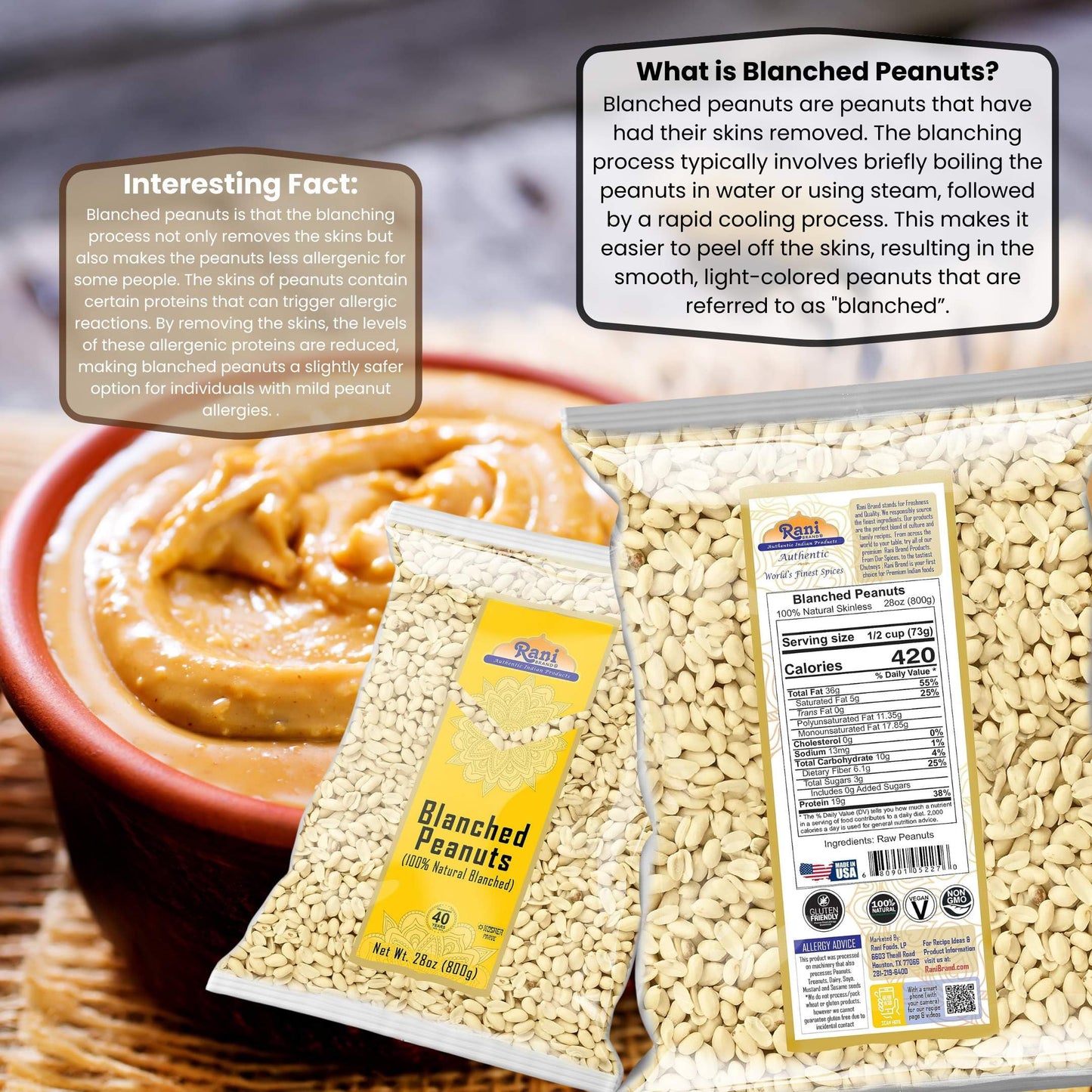
Blanched Peanuts are highly used in sweet and savory applications in various cuisines, including American, Chinese, and Thai. One of the most common uses of Blanched Peanuts is in the production of peanut butter, a crunchy or creamy spread. Peanut, also known as groundnut and goober (Arachis hypogaea), is a crop of global importance. It is widely grown in the tropics and subtropics, being important to both smallholder and large commercial producers. It is classified as both a grain legume and, because of its high oil content, an oil crop. World annual production is about 46 million tonnes per year. Peanut pods develop under the ground, which is very unusual among crop plants. One cup of raw peanuts contains approximately 828 calories, 72 grams of fat, 37 grams of protein, 24 grams of carbohydrates, 12 grams of fiber and 10 grams of saturated fat. These numbers constitute 110 percent of the daily value of fat, 73 percent of protein, 50 percent of saturated fat, 19 percent of fiber and 8 percent of carbohydrates. Raw peanuts have a negligible amount of sodium and are cholesterol free. Raw peanuts' low carbohydrate-to-protein ratio makes them a good snack choice for people following low-carbohydrate, high-protein diets.
Frequently Asked Questions
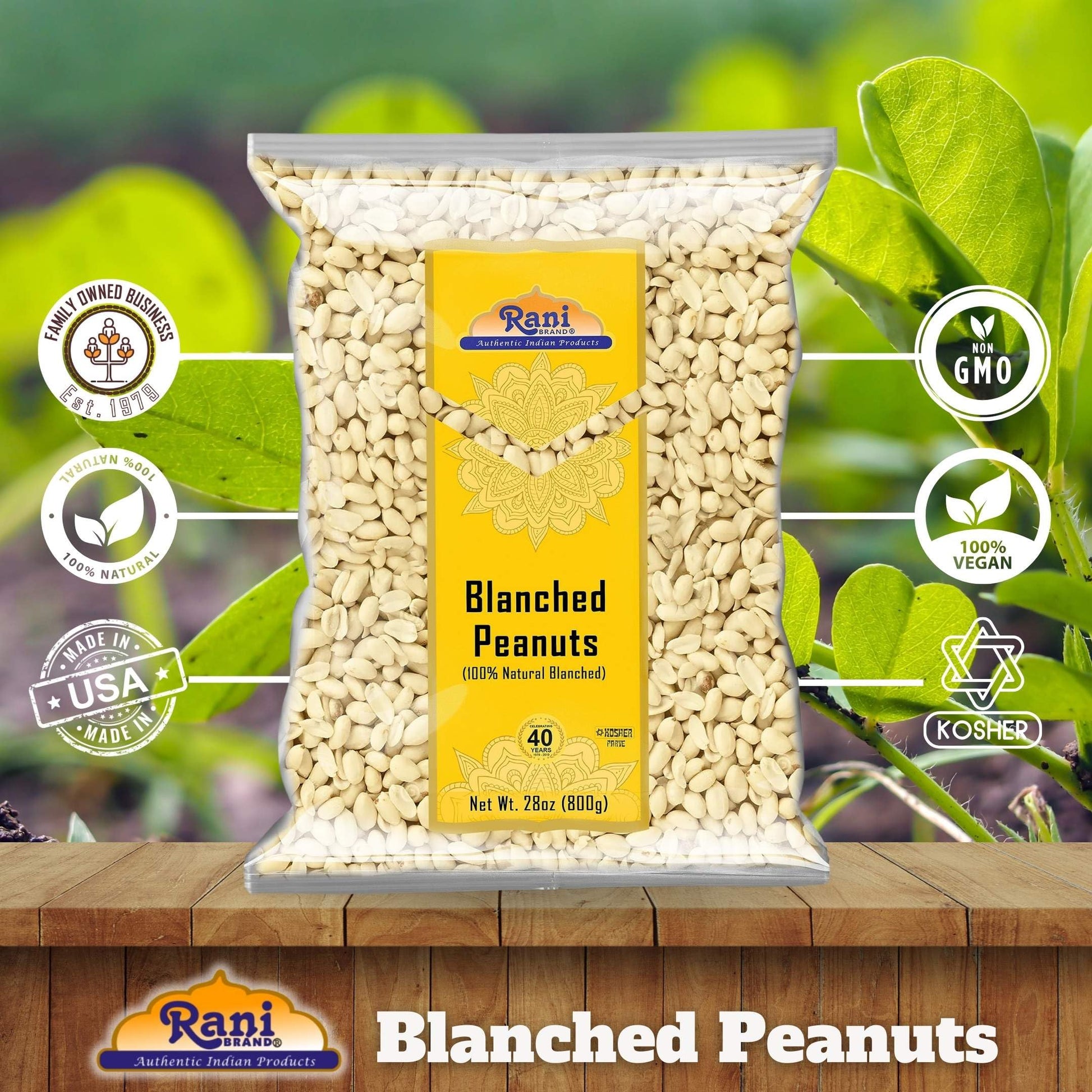
- Q: What are Rani Peanuts made of? A: Rani Peanuts are made from whole, skinless peanuts that are blanched and uncooked. They contain no added salt, sugar, oil, or fat, making them a pure and natural product.
- Q: What is the net weight of Rani Peanuts? A: The net weight of Rani Peanuts is twenty-eight ounces, which is equivalent to one point seventy-five pounds or eight hundred grams.
- Q: Are Rani Peanuts gluten-free? A: Yes, Rani Peanuts are gluten-friendly. They are made without gluten ingredients, making them suitable for individuals with gluten sensitivities.
- Q: How do I use Rani Peanuts in cooking? A: You can use Rani Peanuts in both sweet and savory dishes. They are ideal for making peanut butter, snacks, or as toppings in various cuisines.
- Q: Can I eat Rani Peanuts raw? A: Yes, you can eat Rani Peanuts raw, but they should be further cooked or processed for optimal taste and safety.
- Q: What is the best way to store Rani Peanuts? A: To maintain freshness, store Rani Peanuts in a cool, dry place, ideally in the refrigerator. They can last up to five years when stored properly.
- Q: How do I keep Rani Peanuts fresh? A: To keep Rani Peanuts fresh, refrigerate them after opening. This helps extend their shelf life and maintains their quality.
- Q: Is there a risk of allergies with Rani Peanuts? A: Yes, Rani Peanuts may pose a risk for individuals with peanut allergies. Always check for allergies before consumption.
- Q: How do Rani Peanuts compare to other snack nuts? A: Rani Peanuts are a healthier option compared to many snack nuts as they are all-natural, non-GMO, and contain no preservatives.
- Q: Are Rani Peanuts suitable for vegan diets? A: Yes, Rani Peanuts are suitable for vegan diets as they are made from all-natural ingredients without any animal products.
- Q: What is the calorie content of Rani Peanuts? A: One cup of raw Rani Peanuts contains approximately eight hundred twenty-eight calories, making them a high-energy food.
- Q: Can Rani Peanuts be used in baking? A: Yes, Rani Peanuts can be used in baking. They can be added to cookies, cakes, or used as a crunchy topping for desserts.
- Q: What type of grade are Rani Peanuts? A: Rani Peanuts are Spanish #1 Grade, ensuring a high quality of the product.
- Q: Are Rani Peanuts Kosher certified? A: Yes, Rani Peanuts are Kosher certified, making them suitable for those following Kosher dietary laws.
- Q: What are the dimensions of the Rani Peanuts package? A: The package dimensions of Rani Peanuts are ten point five-one inches in length, seven point two-five inches in width, and one inch in height.