


You will not be allowed to compare more than 4 products at a time
View compareZaatar - Mediterranean Salt Free Za ater Seasoning with Genuine Hyssop - 7.0 OZ No Salt Seasoning and Spices
Zaatar - Mediterranean Salt Free Za ater Seasoning with Genuine Hyssop - 7.0 OZ No Salt Seasoning and Spices
Out of stock
Regular price
$24.33
Sale price
$24.33
Regular price
$34.76
Unit price
per
Shipping calculated at checkout.
Sold by GroceryeShop — Fresh & quality products, delivered in USA.
Returns accepted within 30 days | support@groceryeshop.us
Shipping Information
- Free Standard Shipping — United States only
- Processing Time: 3–5 business days
- Estimated Delivery: 6–10 business days after dispatch
- Securely packed to ensure your purchase arrives in perfect condition
- Tracking number sent via email once dispatched
- Orders over $250 require signature upon delivery. Taxes calculated at checkout.
Returns & Refund
Returns accepted within 30 days of delivery.
Damaged or Defective Item
Free return shipping + replacement or full refund
Wrong Item Received
Free return shipping + replacement or full refund
Change of Mind
Return shipping at customer's expense · Item must be unused & in original packaging
All returns require a Return Authorization (RA) number before sending.
View Full Return & Refund Policy
Safety & Compliance
⚠️
California Proposition 65 Warning
Some products sold on this website may expose you to chemicals known to the State of California to cause cancer, birth defects, or other reproductive harm.
www.P65Warnings.ca.gov
🛒
General Product Safety Advisory
Always read the product label, instructions, and safety warnings before use. Do not use damaged or modified products. Store products in appropriate conditions as specified by the manufacturer.
Keep all products out of reach of children unless specifically designed for their use.
ℹ️
Product Authenticity & Notice
All products sold by GroceryeShop are 100% authentic, sourced directly from trusted suppliers across the USA. Product weights and packaging may vary slightly from images due to seasonal availability and supplier updates.
GroceryeShop — Fresh, Quality Groceries Delivered Nationwide.
Couldn't load pickup availability
Guarantee safe and secure checkout


Product Description
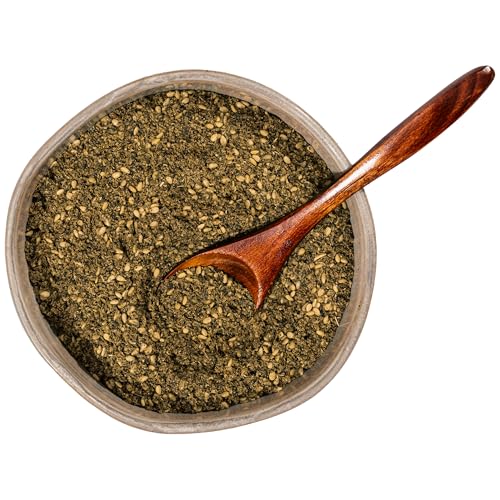
Zaatar (zaah-tur) is a Middle-Eastern herb-spice mixture. It boasts an enduring heritage in the Levant/East Mediterranean region as an essential kitchen table staple. It is a versatile condiment as well as a herbal seasoning and spice. It is an aromatic, zesty, tangy, lively, earthy, and a nutty herb and spice blend. It is often enjoyed as dip with olive oil and bread, a topping on flat breads and salads, and a seasoning on many foods. Examples include bagel and cream cheese, yogurts, salads, roasted vegetable, eggs, meats, fruit, popcorn, and others. The mainstay ingredients of an authentic zaatar the mix, include 1) the ground Zaatar herb, also referred to as wild thyme or Syrian oregano with the scientific name of Origanum Syriacum and is native to the Middle-East and is believed to be the same Hyssop herb plant in biblical references. The zaatar herb combines earthy flavors from thyme, oregano, marjoram, and savory with a peppery finish 2) Sumac powder spice (lemony but without the acidity), and 3) sesame seeds roasted (nutty, crunchy) 4) optional pinch of sea salt. The texture of an authentic mix should not be that of a fine spice powder, but more course, herbal, fluffy and free flowing, and somewhat nutty from freshly roasted sesame seeds.
Frequently Asked Questions
- Q: What ingredients are in the Zaatar seasoning? A: The Zaatar seasoning contains genuine Za'atar herb, lemony sumac, and no added fillers or oils.
- Q: How large is the Zaatar seasoning package? A: The Zaatar seasoning package contains seven ounces of product.
- Q: Is this Zaatar gluten-free? A: Yes, this Zaatar seasoning is gluten-free and contains no wheat.
- Q: How do I use the Zaatar seasoning? A: You can sprinkle Zaatar on salads, soups, or meats, or mix it into yogurt for added flavor.
- Q: Can I use Zaatar in baking? A: Yes, you can knead Zaatar into dough and pastry for enhanced taste.
- Q: Is the Zaatar seasoning suitable for vegan diets? A: Yes, the Zaatar seasoning is suitable for vegan diets as it contains no animal products.
- Q: How should I store the Zaatar seasoning? A: Store the Zaatar seasoning in a cool, dry place, ideally in an airtight container.
- Q: What is the shelf life of Zaatar seasoning? A: The Zaatar seasoning typically has a shelf life of around twelve months when stored properly.
- Q: Does Zaatar seasoning contain any allergens? A: No, the Zaatar seasoning contains no known allergens such as nuts or dairy.
- Q: How can I enhance the flavor of my dishes with Zaatar? A: You can enhance flavors by dunking fresh bread in olive oil and then in Zaatar for a traditional Mediterranean experience.
- Q: Is there a sodium content in the Zaatar seasoning? A: No, this Zaatar seasoning is sodium-free, making it a healthy alternative to salt.
- Q: Can I use Zaatar as a rub for meats? A: Yes, Zaatar makes an excellent rub for meats, imparting a unique flavor.
- Q: What makes this Zaatar different from others? A: This Zaatar is made with genuine Za'atar herb and pure sumac, ensuring authenticity and quality.
- Q: How frequently is the Zaatar seasoning mixed? A: The Zaatar seasoning is mixed in small batches to ensure freshness and quality.
- Q: Where are the ingredients for Zaatar sourced from? A: The ingredients for this Zaatar are sourced from a small farm cooperative in Lebanon.