

The first few times you order groceries online, it feels like cheating in the best way. No parking lot, no cart traffic, no checkout line. Then, somewhere around the third or fourth week, the novelty wears off — and you realize you forgot to add coffee again, your delivery showed up at the worst possible moment, and you're still making a mid-week run to the store anyway.
That's not an online grocery problem. That's a system problem. The people who swear by online grocery shopping aren't doing anything dramatically different from you — they've just built a handful of small habits that remove the friction before it happens. Here's what those habits actually look like.
1. Anchor Your Order to One Fixed Day Each Week
The biggest reason online grocery orders feel disorganized is that they happen reactively — you run out of something, you panic-order, you forget five other things. Picking one day each week to place your order (not receive it, place it) changes everything.
Think of it like a standing meeting with your kitchen. Sunday evening works well for a lot of households because you're already mentally planning the week ahead. Wednesday works if your schedule is lighter mid-week. The day matters less than the consistency. Once placing an order becomes a weekly ritual rather than an emergency response, your cart stops feeling chaotic.
2. Build Your Cart by Category, Not by Memory
Trying to remember everything you need off the top of your head is how you end up with three kinds of pasta and no olive oil. Instead, walk your cart through the same category sequence every time — produce, proteins, dairy and eggs, pantry staples, snacks, household items. It mirrors how a real store is laid out, and it catches the gaps that pure memory misses.
Keep a running notes list on your phone for the week — anything you use up or notice running low goes straight on it. When your order day comes around, you're not starting from scratch. You're just confirming what's already there. This one habit alone cuts your ordering time dramatically.
If you're building out a full pantry order, the post on how to build a weekly grocery order around fresh produce is worth reading alongside this — it covers how to sequence fresh items so nothing goes to waste before the week ends.
3. Use Bulk Formats for Anything You Use Every Single Week
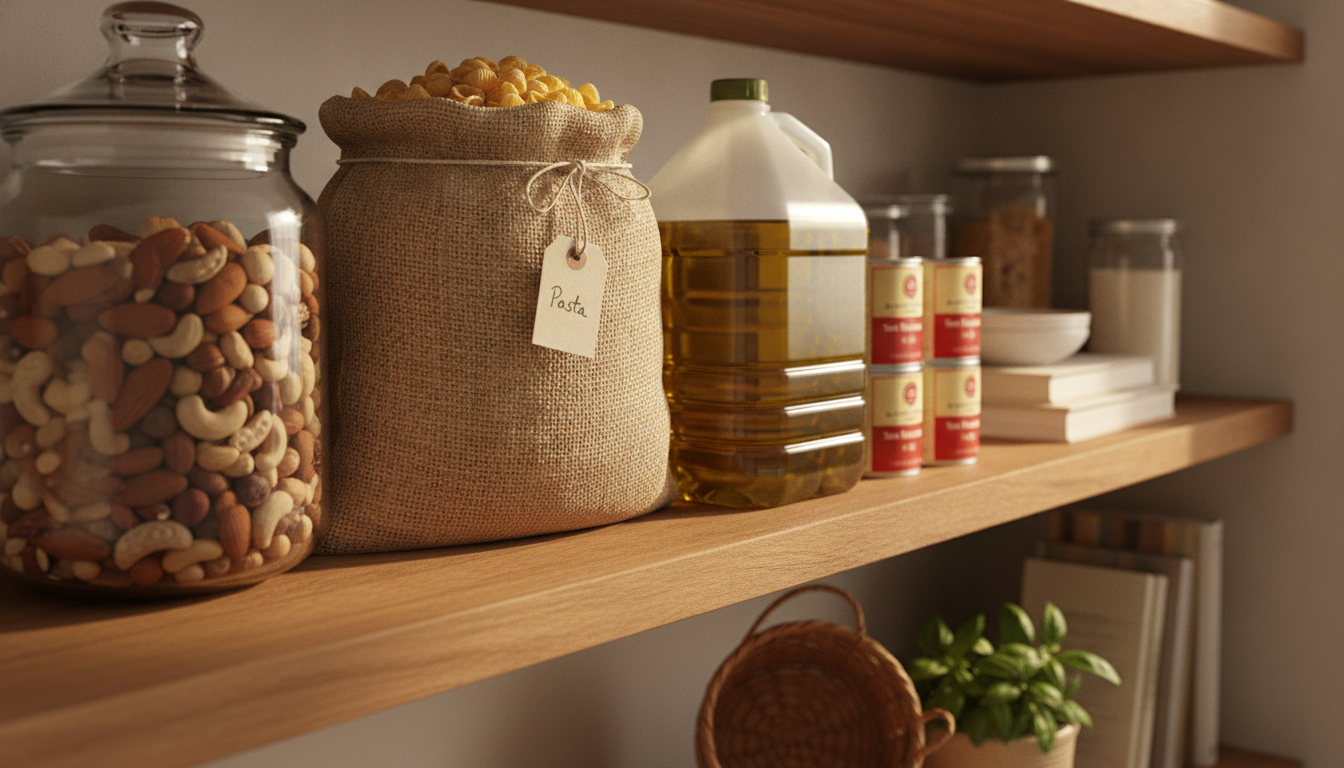
There's a category of grocery items that never varies week to week — things like cooking oils, canned tomatoes, dried pasta, rice, nuts, coffee, and pantry staples you genuinely go through on autopilot. Buying these in larger formats every few weeks instead of standard sizes every week does two things: it lowers the per-unit cost, and it removes those items from your mental load entirely.
The rule of thumb: if you've bought it three weeks in a row without thinking about it, it belongs in a bulk or larger-format order. Best-selling staples like nuts, snacks, and pantry basics are natural candidates. You're not stockpiling — you're just shopping smarter for the things that were never going to surprise you anyway.
4. Schedule Delivery for a Time You're Actually Home and Ready
This sounds obvious until you've had a delivery arrive while you're on a work call, mid-school pickup, or out for a run — and your refrigerated items sat out longer than they should have. Delivery timing is a variable you control, so treat it like one.
Pick a window that lands when you have ten minutes to put things away properly. For most households, that's mid-morning on a weekday if someone's working from home, or late afternoon on a weekend. If you're ordering fresh produce or proteins, this matters more than it does for pantry items. A little planning here protects the quality of what you ordered.
5. Keep a Short "Always Reorder" List Separate from Your Weekly Cart
Your weekly cart changes. Your standing list shouldn't. Think of your standing list as the ten to fifteen items that are essentially infrastructure — the things that, if they ran out, would genuinely disrupt your household. Coffee, cooking oil, your go-to hot sauce, the baby food your kid eats every morning, the snack bars everyone reaches for after school.
Keep this list in a saved note or a cart bookmark. Every time you build your weekly order, add these first. You're not deciding whether to buy them — you're just confirming the quantity. It takes thirty seconds and means you will never run out of the things that actually matter.
6. Treat Your First Few Orders as a Setup Investment, Not a Test
A lot of people try online grocery shopping once, have a slightly awkward experience because their list wasn't organized or they chose the wrong delivery window, and conclude it "doesn't work for them." The honest truth is that the first order or two are setup costs — you're learning the interface, figuring out which products you like, and calibrating your quantities.
Give it four weeks before you judge it. By week four, your cart has memory. You know which delivery windows work. You've found the formats and brands that fit your household. At that point, you're not shopping — you're just confirming a routine that mostly runs itself. That's the version of online grocery shopping people are actually talking about when they say it saves them time.
If you're still weighing whether the convenience genuinely pays off, the breakdown in does online grocery shopping actually save you money is an honest look at where it does and doesn't — worth a read before you fully commit to a routine.
The Habit Underneath All the Habits
Every one of these six habits is really the same thing: reducing the number of decisions you make each week. The goal isn't to turn grocery shopping into a project. It's to make it small enough that it stops being a thing you think about.
Once it's a routine, it genuinely is easier than driving to the store. But it takes a few weeks of intentional setup to get there. Put in that setup, and the payoff compounds every week after.
Ready to make it a habit? Shop Groceryeshop's 25,000+ product catalog and set up your weekly order today — with free shipping on most orders and everything from fresh produce to pantry staples in one place, it's the easiest place to start building your routine.
Frequently Asked Questions
How do I avoid forgetting items when I shop for groceries online?
The most reliable method is keeping a running list throughout the week — add anything you use up or notice running low as it happens, rather than trying to remember everything when you sit down to order. Then, when you build your cart, go category by category (produce, proteins, dairy, pantry, snacks, household) rather than from memory alone. This combination catches the gaps that pure recall almost always misses.
How often should I place an online grocery order?
Once a week works well for most households — it's frequent enough that you're not running out of fresh items, but not so frequent that ordering itself becomes a chore. The key is anchoring your order to a fixed day rather than placing it reactively when you run out of something. Over time, that weekly rhythm becomes automatic.
Is it worth buying pantry staples in bulk when ordering online?
For items you genuinely go through every week without variation — cooking oils, dried pasta, rice, nuts, coffee — bulk or larger formats make sense. They reduce how often you need to reorder those items and typically lower your per-unit cost. The practical rule: if you've bought it three weeks in a row without thinking about it, it's a good bulk candidate. Items with shorter shelf lives or ones you're still experimenting with are better bought in standard sizes first.
What if my first online grocery order didn't go smoothly — should I keep trying?
Yes — the first order or two are genuinely a setup phase, not a fair trial. You're learning the platform, figuring out delivery windows that fit your schedule, and discovering which products and quantities work for your household. Most people who stick with it for four weeks find the experience significantly smoother by that point, because their cart has memory and their routine has settled. A rough first order is normal, not a signal that online grocery shopping isn't for you.

