

Most people pick curbside pickup or home delivery once, stick with it forever, and never really ask whether it's still the right call. If your life has changed — new job hours, a baby, a longer commute, a bigger household — there's a good chance your grocery method hasn't kept up.
Neither model is universally better. The right one depends on what your week actually looks like, not what sounds more convenient in theory. Here's how to think through it honestly.
What You're Really Trading When You Choose Pickup
Curbside pickup feels like the best of both worlds: someone else does the walking, you just swing by and grab it. And for certain schedules, it genuinely is. If you pass a store on your commute, pickup slots are easy to grab, and you're ordering a predictable weekly basket, it works seamlessly.
But there's a catch most people don't think about until it bites them. You're still spending time in transit. Even a ten-minute detour each way adds up across a month, and if the pickup window runs late or there's a substitution you need to sort out in the parking lot, that buffer evaporates fast. Pickup also anchors you to a physical location — which means it only works if a store with your preferred selection is actually on your route.
The other thing pickup doesn't solve: the mental overhead of planning around a window. You have to be in the right place at the right time, which isn't always possible when your day goes sideways at 3 p.m.
What Home Delivery Actually Gets Right
Home delivery removes the trip entirely. That's not a small thing. For households where the grocery run requires loading kids into the car, finding parking, and fighting the Saturday afternoon crowd, the time saved is real and repeatable every single week.
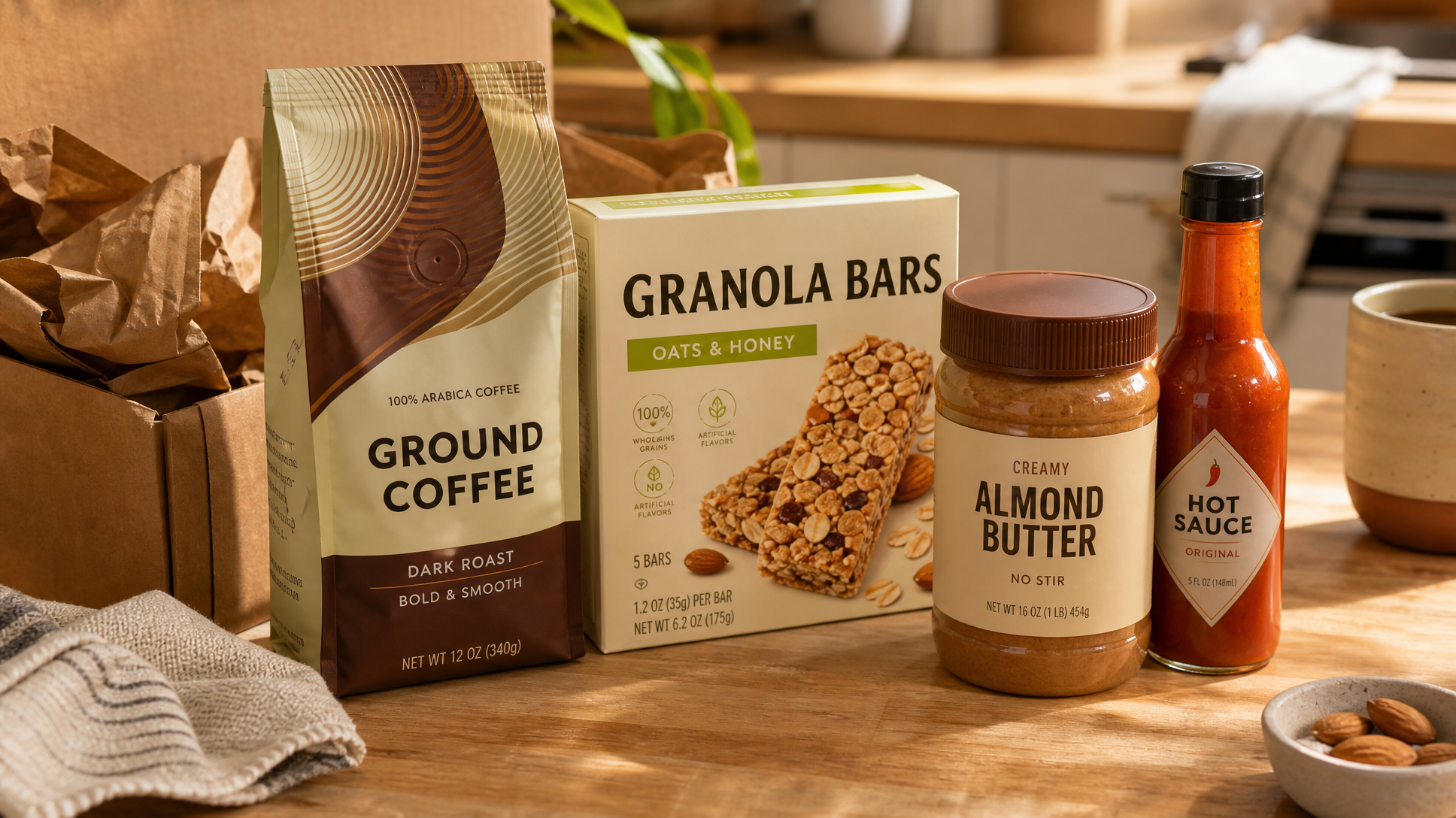
It also opens up a much wider selection. When you're shopping online for home delivery, you're not limited to what fits in a regional store's footprint. That matters if you're looking for specialty items, specific brands, or a broader range of pantry staples — the kind of variety you'd only find by visiting three different stores in person. Groceryeshop, for example, carries over 25,000 products across every grocery category, shipped to most US addresses with free shipping on most orders — no membership required.
The honest trade-off: you're trusting someone else to pick your produce and pack your order. For shelf-stable pantry items, frozen foods, and packaged goods, that's a non-issue. For something like ripe avocados or a specific cut of meat, it helps to shop with a retailer that sources carefully and has a clear freshness standard.
The Questions That Actually Settle It
Instead of debating the two models in the abstract, run through these four questions about your actual week:
- Do you pass a grocery store on a route you already take? If yes, pickup costs you almost nothing extra. If you'd have to make a separate trip, that changes the math significantly.
- How predictable is your schedule? Pickup requires you to commit to a window. If your days are reliably structured, that's fine. If they're not, you'll find yourself rescheduling slots or just abandoning the cart and stopping somewhere on the way home anyway.
- What's the bulk of your order? Pantry staples, frozen foods, snacks, beverages, baby food, household supplies — these ship and deliver without any quality concern. If your cart is mostly packaged goods with a few fresh items, delivery works beautifully. If you're buying mostly loose produce and fresh-cut meat, pickup gives you more control at the point of handoff.
- How large is your household? Bigger households tend to order more volume, which makes free-shipping thresholds easier to hit and makes the time saved by delivery more significant. A single person buying for one might not mind a quick pickup run; a family of five stocking up for the week has a lot more to gain from having it arrive at the door.
When Pickup Makes More Sense
Pickup is genuinely the better call when your store is on your daily route, your schedule is consistent enough to book a window reliably, and you're buying a lot of fresh produce you want to eyeball before you leave. It also works well for smaller, more frequent top-up shops — the kind where you're grabbing ten items, not doing a full weekly haul.
When Delivery Makes More Sense
Delivery earns its place when your week is unpredictable, when you're ordering a large basket of pantry staples and packaged goods, or when the nearest store with your preferred selection isn't close. It's also the obvious choice when you simply don't have the bandwidth for another errand — which, for a lot of households, is most of the time.
One underrated advantage of delivery: it's easier to shop thoughtfully. Without the physical store nudging you toward end-cap displays and impulse buys, you tend to stick closer to your list. If you've ever walked into a store for five things and walked out with twenty, you know exactly what this means for your grocery budget. For more on that, this post breaks down where online grocery shopping actually saves money — and where it doesn't.
A Practical Middle Ground
You don't have to commit to one forever. A lot of households use delivery for the big weekly or bi-weekly stock-up — all the pantry staples, frozen meals, beverages, snacks, and household supplies — and then do a quick in-store or pickup run mid-week for fresh produce and anything time-sensitive. That split works well precisely because delivery handles the heavy, boring, predictable part of grocery shopping without any sacrifice in quality.
If you haven't tried ordering your pantry staples online, it's worth running one order to see how much of your weekly list it covers. You might find that most of it — the coffee, the canned goods, the cereal, the snacks, the cleaning supplies — arrives in perfect shape and frees up your in-store trips for the things that actually benefit from being chosen in person.
See what's available for delivery to your address at Groceryeshop — free shipping on most orders, no membership required. First-time shoppers can use code WELCOME5 for 5% off their first order.
Frequently Asked Questions
Is home grocery delivery more expensive than pickup?
It depends on the retailer. Some charge delivery fees or require a membership; others offer free shipping once you hit a minimum order threshold. At Groceryeshop, most US orders ship free with no membership required, which removes the cost difference that often makes people default to pickup.
Will fresh produce hold up during home delivery?
For most fresh produce, yes — especially if it's packed carefully and delivered promptly. The key is shopping with a retailer that prioritizes sourcing quality and handles packing seriously. Shelf-stable items, frozen foods, and packaged goods ship without any quality concern at all.
Can I make last-minute changes to a home delivery order?
Most online grocery retailers allow you to edit your order up until a cutoff point before it's packed or shipped. Check the specific retailer's policy, but generally speaking, the earlier you place your order, the more flexibility you have to add or remove items before it goes out.
How do I know if free shipping applies to my address?
The easiest way is to add items to your cart and enter your shipping address at checkout — most online grocery stores show shipping costs (or confirm free shipping) before you complete the order. Groceryeshop ships to most US addresses, so it's worth checking directly on the site.
