

Most of us learned to cook one kind of rice and never really questioned it. White rice if you grew up in a certain kind of kitchen. Brown rice if someone told you it was healthier and you took their word for it. Rice pilaf if you wanted something that felt a little fancier on a Tuesday night. The problem is, each of these pulls its weight differently — and defaulting to just one means you're probably under-using your pantry.
This isn't a nutrition lecture. It's a practical breakdown of when each type of rice actually makes sense, using two real pantry staples — the 365 By Whole Foods Market Organic Whole Grain Brown Rice (90 Second) and the 365 By Whole Foods Market Organic Garlic & Herb Rice Pilaf — as honest examples of what's actually on shelves.
The Honest Difference Between Brown and White Rice
Brown rice and white rice start as the same grain. The difference is processing: white rice has had its bran and germ layers removed, leaving mostly the starchy endosperm. Brown rice keeps those outer layers intact, which gives it a chewier texture, a nuttier flavor, and a longer cook time.
On the stovetop, white rice typically cooks in roughly 15–20 minutes. Brown rice — because of those extra layers — needs significantly longer, often 40–50 minutes, and benefits from a brief rest after cooking. That's not a dealbreaker, but it does mean brown rice isn't the grain you reach for when dinner needs to be on the table in 20 minutes.
Flavor-wise, brown rice has a mild earthiness that pairs well with bold proteins — braised chicken thighs, teriyaki, stir-fry with soy and ginger. White rice is a neutral canvas. It absorbs sauces beautifully and doesn't compete with anything on the plate, which is exactly why it's the go-to in so many cuisines worldwide.
Neither one is wrong. They just have different jobs.
Where the 90-Second Brown Rice Actually Fits
The biggest practical objection to brown rice — the long cook time — is solved by the 365 By Whole Foods Market Rice Brown Whole Grain 90 Second Organic. It's a microwave-in-pouch format: the rice is pre-cooked and sealed, so it's ready in 90 seconds without any stovetop work at all.
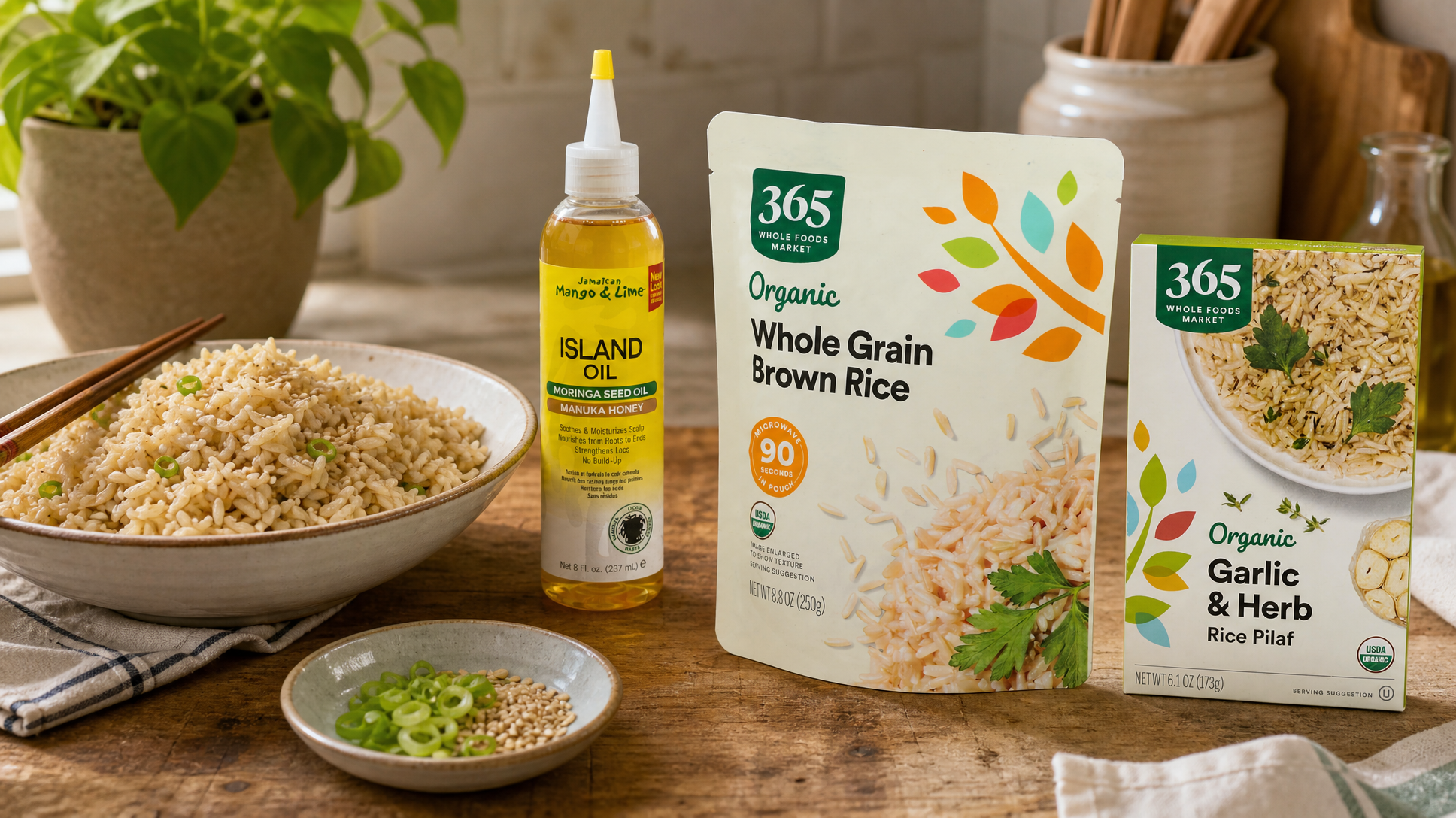
That makes it genuinely useful on weeknights when you want the texture and flavor of whole grain rice without planning ahead. Toss it under a fried egg and some hot sauce for a quick lunch. Stir it into a grain bowl with whatever vegetables are left in your fridge. It's the kind of thing that earns its spot in the pantry because it actually gets used — not because it's sitting there as a backup plan.
It's also USDA Organic, which matters if you're trying to keep your pantry consistent with the rest of your organic grocery haul without hunting through specialty aisles.
What Rice Pilaf Is Actually Doing
Rice pilaf isn't a type of rice — it's a method and a flavor profile. Traditional pilaf involves toasting the rice in fat before adding liquid, which develops a nuttier, more complex base flavor. Seasoned pilaf mixes take that further by building in aromatics and herbs so the rice arrives with its own character.
The 365 By Whole Foods Market Organic Garlic & Herb Rice Pilaf is a boxed dry mix — you cook it on the stovetop — and it's genuinely different from plain rice in one key way: it's already seasoned. That's useful when you want a side dish that doesn't need much else around it. Roast a chicken, steam some green beans, and let the rice pilaf do the flavor work. Done.
The trade-off is flexibility. Because it's already seasoned with garlic and herbs, it doesn't work as a neutral base the way plain rice does. You wouldn't use it under a curry or a teriyaki bowl — the flavors would fight. But alongside grilled fish, roasted vegetables, or a simple pan sauce? It carries the whole plate.
A Simple Framework for Stocking Both
Here's how to think about it without overcomplicating things:
- Use plain white rice when the dish has a sauce, a marinade, or a strong flavor you want the grain to absorb rather than compete with. Think curries, stir-fries, beans and rice, or anything saucy.
- Use whole grain brown rice when you want more texture and a heartier bite — grain bowls, meal-prep containers, or dishes where the rice shares the spotlight rather than playing background.
- Use rice pilaf when the rice needs to be the side dish, not just the base. It's the move when dinner is simple — a protein and a vegetable — and you want the starch to add flavor, not just fill space.
If your household eats rice a few times a week, keeping the 90-second brown rice pouches and a box of garlic & herb pilaf in the pantry covers most situations without any overlap. They're genuinely doing different things.
A Note on Cooking Long Grain Rice on the Stove
If you're cooking plain long grain rice from scratch — not a pouch, not a mix — the method matters more than most people realize. The most common mistake is lifting the lid too early and letting the steam escape. Here's the basic approach that works for most long grain white or brown rice:
- Rinse the rice until the water runs mostly clear. This removes surface starch and helps prevent gumminess.
- Use a ratio of roughly two parts water to one part rice for white; brown rice often needs a touch more water and more time.
- Bring to a boil, then drop to the lowest simmer and cover tightly. Don't touch it.
- When the time is up (white rice: roughly 15–18 minutes; brown rice: roughly 40–45 minutes), take the pot off the heat and let it sit, still covered, for about 10 minutes before fluffing.
That resting step is the one most people skip. It lets the moisture redistribute so you get fluffy, separate grains instead of a sticky bottom layer.
Of course, if it's a weeknight and you just need rice on the table fast, the 90-second pouch makes all of this irrelevant — and that's a perfectly legitimate choice.
Stock the Right Rice (or All of It)
You don't have to choose one type of rice and commit to it forever. Brown rice, white rice, and seasoned pilaf each solve a different dinner problem — and when all three are in the pantry, you're rarely stuck for a side dish. Browse the Groceryeshop pantry staples and stock up without a store run — free shipping on most orders, and the 365 Organic rice options are ready to add to your cart right now.
If you're building out a smarter pantry overall, this guide on what's worth ordering in bulk vs. buying fresh is worth a read — it applies the same logic to your whole grocery list.
Frequently Asked Questions
Is brown rice actually healthier than white rice?
Brown rice retains its bran and germ layers, which means it contains more fiber and certain micronutrients than white rice. White rice has those layers removed during milling, making it more refined. That said, white rice is not an unhealthy food — it's a staple in many of the world's healthiest cuisines. The practical difference comes down to your overall diet, not a single ingredient.
Can I use the 90-second brown rice pouch on the stovetop instead of the microwave?
The 365 Organic Whole Grain Brown Rice 90-Second pouch is designed for microwave use in the pouch. If you prefer stovetop, you can empty the contents into a pan and warm it over medium heat with a splash of water, stirring until heated through — but follow the package directions for best results, since the rice is already pre-cooked.
What's the difference between rice pilaf and regular seasoned rice?
Technically, pilaf refers to a cooking method where the rice is toasted in fat before liquid is added, which creates a more complex, nutty base flavor. Boxed rice pilaf mixes — like the 365 Organic Garlic & Herb Rice Pilaf — build on that tradition by including aromatics and seasonings, so the finished dish has more depth than plain rice with seasoning stirred in afterward. The result is a side dish that stands on its own rather than just supporting other flavors.
How much water do I use when cooking long grain white rice on the stove?
A common starting ratio for long grain white rice is roughly two parts water to one part dry rice. For brown rice, you may need slightly more water and a longer cook time. These are general guidelines — always check the package instructions for the specific rice you're using, since pre-rinsing, altitude, and pan type can all affect the result.
