

You've probably done the mental math at least once: Would I actually spend less if I just ordered groceries online? The honest answer isn't a clean yes or no. It depends on what you're buying, how often you order, and a few habits that either protect your savings or quietly eat them.
Here's a category-by-category breakdown of where online grocery shopping genuinely works in your favor — and where you need to watch yourself.
Where Online Grocery Shopping Saves You Real Money
1. Impulse Purchases Disappear
This is the biggest, most underrated savings driver. When you're walking a physical store, the entire layout is engineered to get you to buy things you didn't plan on. End caps, checkout-lane candy, the bakery smell pumped through the ventilation — it's not accidental. Studies by consumer behavior researchers consistently show that a significant share of in-store purchases are unplanned.
Online, you search for what you need and add it to your cart. There's no aisle to drift down, no sale display to stop at. You're far more likely to leave with exactly what was on your list — and nothing else.
2. Bulk Pricing on Non-Perishables Is Genuinely Better
Shelf-stable items — canned goods, nuts, nut butters, dried fruit, beverages, baking staples — are where online grocery ordering pays off most clearly. You can compare unit prices across sizes without doing mental gymnastics in a crowded aisle, and buying in larger quantities often brings the per-unit cost down meaningfully.
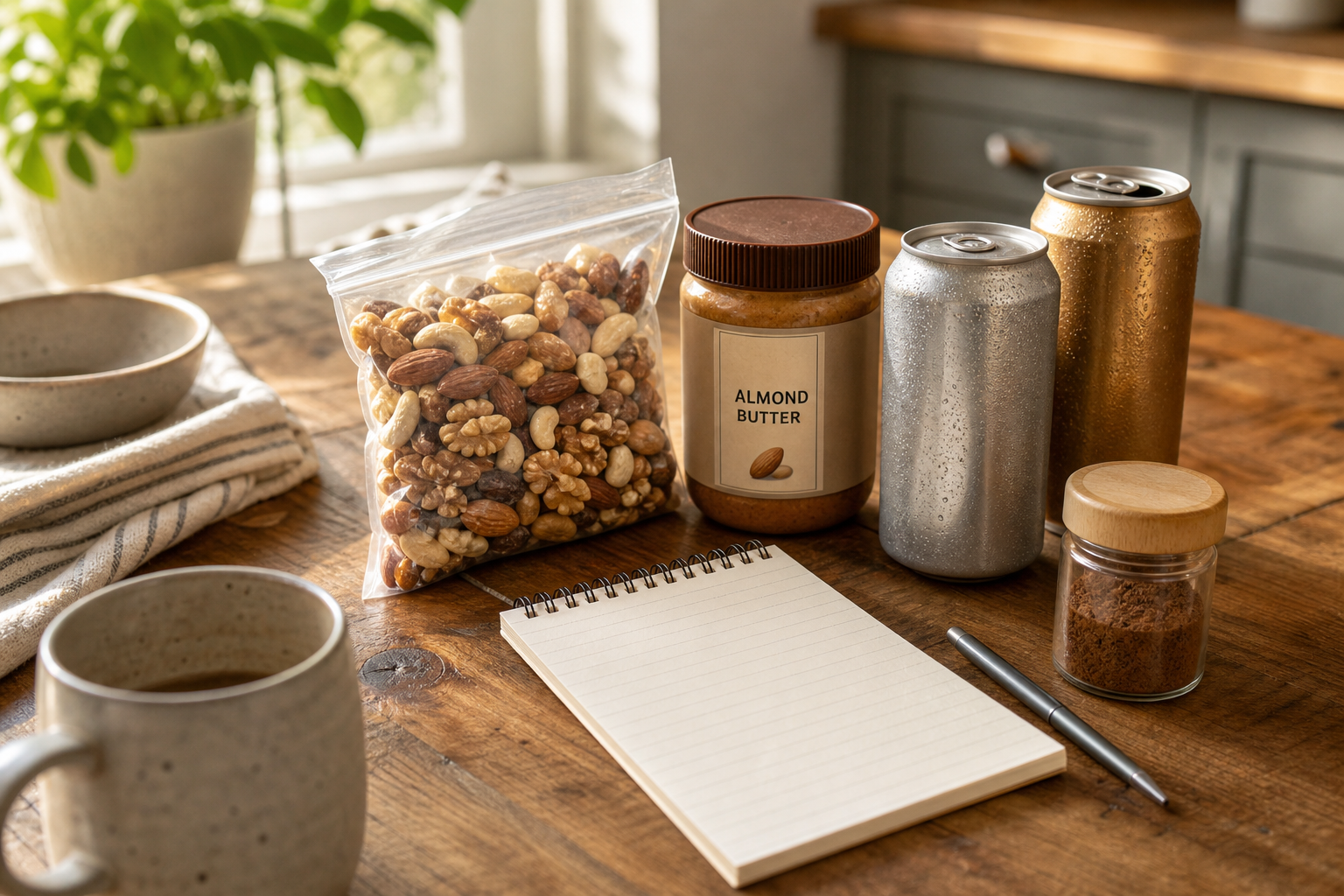
Categories like almonds and cashews, almond butter, and beverages are classic examples — they don't spoil quickly, you'll definitely use them, and the savings on a larger order are real. If you're stocking a pantry rather than shopping for tonight's dinner, online is almost always the smarter move.
For a deeper look at which staples make the most sense to buy in bulk versus weekly, this post breaks it down category by category.
3. You Can Actually Stick to a Budget
Online carts show you a running total in real time. That alone changes behavior. When you can see the number climbing, you make tradeoffs consciously — you remove the fancy olive oil and keep the one that's fine. In a physical store, that reckoning only happens at the register, and by then it's awkward to put things back.
Combine that with the ability to save a recurring cart of your standard weekly items, and you've essentially turned grocery shopping into a repeatable, predictable expense rather than a variable one.
Where Online Grocery Shopping Can Cost You More
Delivery Fees and Minimum Order Thresholds
This is where people get tripped up. A $6–10 delivery fee on a $35 order is a meaningful percentage of your total spend. If you're placing small, frequent orders, the fees compound quickly and can wipe out every other saving.
The fix is straightforward: consolidate your orders. Instead of ordering three times a week, build a fuller cart once a week (or less). Most platforms have a minimum order amount that unlocks free or reduced-cost delivery — hit it intentionally, not by adding things you don't need.
Fresh Produce: Still a Category That Requires Judgment
Fresh produce is the one area where online ordering asks you to trust someone else's judgment about ripeness and quality. For items where you'd normally squeeze the avocado or smell the berries, that's a real trade-off. It doesn't mean you shouldn't order produce online — plenty of people do, successfully — but it's worth being realistic about which items matter most to you to inspect in person.
Fruits like apples and bananas travel and hold well, which makes them lower-risk online purchases. More delicate items like berries are worth ordering from a store you've come to trust over time.
The "Add-On Temptation" Is Still Real, Just Different
Online stores have their own version of the impulse buy: the "frequently bought together" suggestion, the sale banner at the top of the page, the limited-time deal on something you didn't need. It's less aggressive than a physical store, but it's there. The discipline of shopping from a list applies online just as much as it does in person.
The Honest Verdict
Online grocery shopping saves most households money — but only if you use it intentionally. The savings come from fewer impulse buys, smarter bulk purchasing on non-perishables, and better budget visibility. The losses come from small, frequent orders that accumulate delivery fees and from treating the platform like a browsing experience rather than a list-driven errand.
If you're ordering shelf-stable staples in reasonable quantities and consolidating your trips, online grocery shopping is almost certainly cheaper than in-store. If you're ordering a few items every other day, you're probably paying more.
Browse Groceryeshop's best-seller staples and see what bulk pricing looks like before your first order — it's the fastest way to judge whether the math works for your household.
Frequently Asked Questions
Is online grocery shopping cheaper than going to the store?
For most households, yes — primarily because online shopping eliminates impulse purchases and makes it easier to compare unit prices and stick to a list. The main exception is when delivery fees aren't offset by order size. Consolidating orders and hitting any free-delivery threshold keeps the savings intact.
What groceries are best to buy online versus in-store?
Non-perishables — nuts, nut butters, canned goods, beverages, baking spices, and other shelf-stable pantry items — are the clearest wins online. They travel well, hold long, and bulk pricing is easy to evaluate. Fresh produce is more of a judgment call; hardier items like apples and bananas are low-risk, while very delicate items depend on how much you trust the supplier.
How do I avoid paying too much in delivery fees when ordering groceries online?
The simplest approach is to order less frequently but with a fuller cart each time. Check whether the platform has a minimum order threshold for free or reduced delivery, and plan your list to meet it naturally — not by adding items you don't need. Treating your online grocery order like a weekly or bi-weekly stock-up rather than a daily convenience run makes the fee-to-savings ratio much more favorable.
Does buying groceries online help with sticking to a budget?
It genuinely does for most people. The running cart total is visible the whole time you're shopping, which prompts real-time tradeoffs rather than a surprise at the register. Saving a recurring cart of your regular items also turns grocery spending into a more predictable, plannable expense from week to week.
