

Every serious home baker has been there: you crack open a jar of cinnamon that's been sitting in the cabinet since last Thanksgiving, give it a sniff, and get... almost nothing. That faint, vaguely spiced ghost of what cinnamon is supposed to smell like. You use it anyway, and the cookies are fine — but fine isn't what you were going for.
The whole spices vs. ground spices debate sounds like a question for professional pastry chefs, but it actually matters a lot at the home kitchen level. The good news is that the answer isn't "always grind your own" — it's more nuanced, and once you understand the logic, you'll stop second-guessing your spice drawer entirely.
Why Spice Freshness Actually Matters in Baking
Spices get their flavor from volatile aromatic compounds — the same oils that hit your nose when you open a fresh jar. Once a spice is ground, those compounds start escaping. Heat, light, and air all speed that up. This is why a freshly ground spice almost always smells more vivid than its pre-ground counterpart: more of those aromatic oils are still intact.
In baking, this matters more than in savory cooking. When you're making a stew, you can taste and adjust. When the cake is already in the oven, you're committed. The spice flavor baked into the crumb is whatever was in the batter — no second chances.
That said, not every spice degrades at the same rate, and not every bake is sensitive enough to notice the difference. That's the real variable here.
When Freshly Ground Makes a Noticeable Difference
Some spices are worth grinding at home. Cardamom is the clearest example. The aromatic oils in cardamom pods are extraordinarily volatile — once the pod is cracked and the seeds are ground, flavor starts escaping within days. If you're making a Scandinavian cardamom bun, a chai-spiced cake, or any recipe where cardamom is the headline note, buying whole pods and grinding them yourself right before baking is genuinely worth the extra two minutes.
Nutmeg is another one. Freshly grated whole nutmeg has a warmth and depth that pre-ground nutmeg rarely matches. For a pumpkin pie or a spiced custard where nutmeg is prominent, a whole nutmeg and a Microplane make a real difference.
Black pepper in savory baked goods (think cheese crackers or spiced shortbread) and cloves in whole form also benefit from last-minute grinding. The pattern: the more prominent a single spice is in the final product, the more its freshness matters.
When Pre-Ground Is the Smarter Call
For most everyday baking, pre-ground spices are not only fine — they're actually the better choice. Here's why: consistency. A good pre-ground cinnamon is milled to a uniform particle size, which means it distributes evenly through a batter or dough. Home grinding without a dedicated spice grinder can leave you with uneven textures, which in delicate baked goods can mean pockets of intense flavor and bland spots elsewhere.
Pre-ground also wins on convenience for complex spice blends. If a recipe calls for a mix of cinnamon, ginger, allspice, and cloves — say, for a gingerbread or a spiced apple cake — measuring pre-ground versions is fast, accurate, and repeatable. Grinding four separate spices and then measuring them introduces more variables, not fewer.
The key is buying good pre-ground spices and storing them properly (more on that below). A high-quality pre-ground cinnamon that's three months old beats a mediocre whole spice you've been grinding in a dusty coffee grinder.
The Honest Guide: Which Spices to Buy Whole vs. Pre-Ground
- Buy whole and grind yourself: Cardamom, nutmeg, whole cloves (for recipes where they're a lead flavor), black pepper for savory bakes, coriander for specific applications.
- Buy pre-ground with confidence: Cinnamon, ginger, turmeric, allspice, paprika, cayenne, and any spice that's part of a multi-spice blend. These hold reasonably well when stored correctly and are nearly impossible to grind to the right fineness at home without professional equipment.
- It depends: Cumin and star anise sit in the middle — if you bake with them occasionally, pre-ground is fine; if you use them constantly, whole gives you more flexibility.
How to Store Ground Spices So They Don't Go Flat
This is where most home bakers lose the battle before it starts. The cabinet right next to the stove — warm, sometimes steamy, definitely exposed to light — is the worst possible place for spices. Heat and humidity are the enemies of volatile aromatic compounds.
Store your ground spices in a cool, dark, dry spot. A pantry shelf away from the oven, a drawer, or even a dedicated spice cabinet on an interior wall all work well. Airtight containers matter too: the original jar is usually fine if you keep the lid tight, but if you're decanting into anything, make sure it seals properly.
As a general rule, ground spices are at their best within a year of opening, and whole spices can last considerably longer. The sniff test is your most reliable tool — if a spice smells faint or musty, it's time to replace it, regardless of the date on the jar.
One practical habit: when you open a new jar, write the date on the bottom with a marker. You'll thank yourself in eight months when you're trying to remember whether that paprika is still worth using.
A Few Baking Ingredients That Aren't Spices — But Deserve the Same Attention to Freshness
While you're thinking about freshness in your baking pantry, it's worth applying the same logic to a few other staples. NOW Foods Carob Powder — a dry-roasted, fat-free alternative to cocoa with no added sugar — is one of those ingredients that benefits from careful storage. Like ground spices, carob powder can absorb ambient odors and lose its characteristic toasty sweetness if left exposed to air. Keep it sealed and away from heat, and it'll perform reliably in brownies, cookies, and hot drinks.
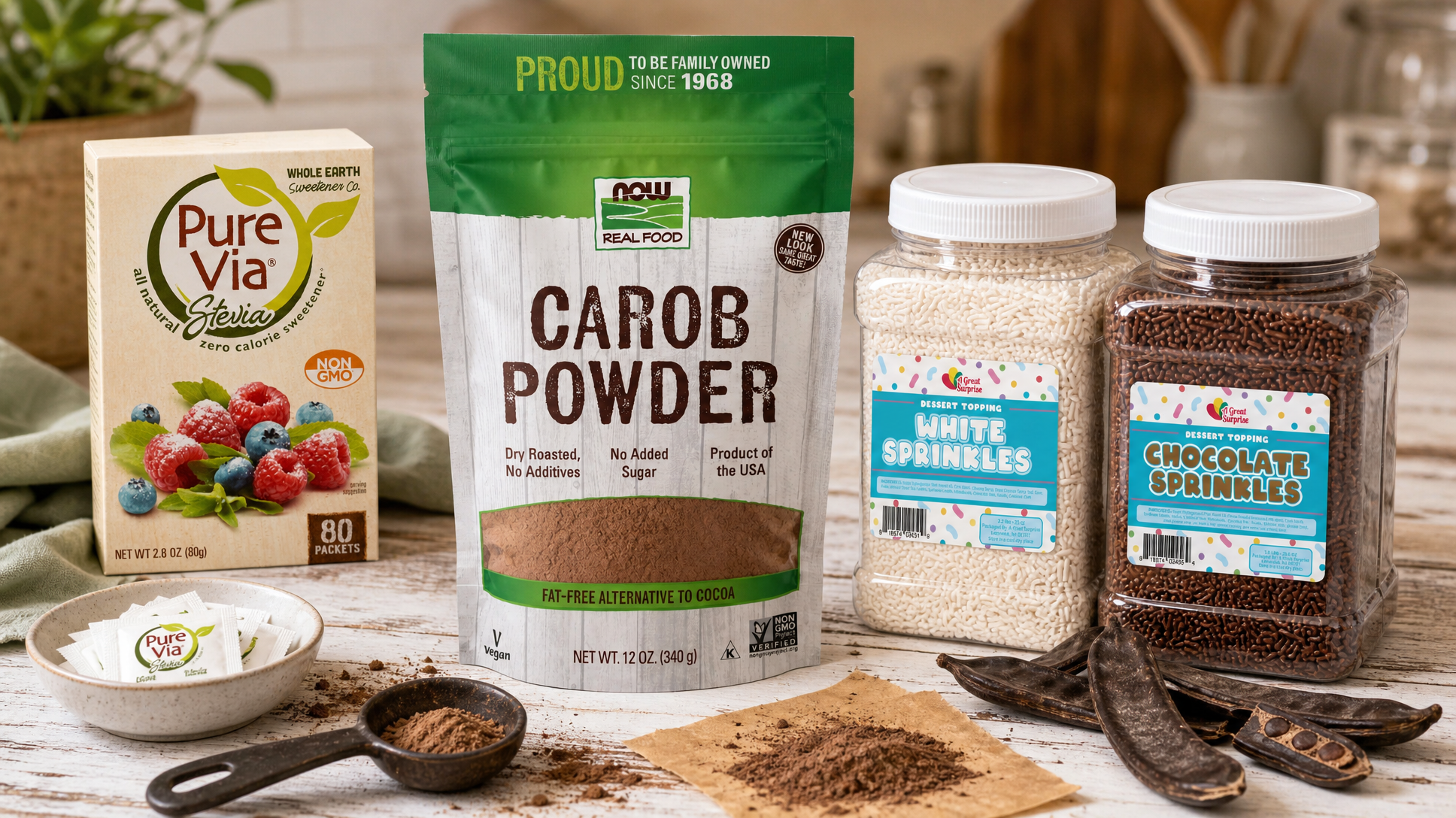
Similarly, if you're decorating baked goods, the quality of your finishing touches matters. White Sprinkles Bulk jimmies in a resealable container and Chocolate Sprinkles in a resealable container both stay fresher longer when the lid is sealed between uses — the resealable format on both of those is genuinely useful, not just a packaging gimmick. And for sweetening batters or frostings without reaching for sugar, Pure Via Zero Calorie Stevia packets (the 80-count pack of 3 is a smart buy if you bake regularly) offer a consistent, measured option that's easy to work into recipes that call for a lighter touch.
None of these are spices in the traditional sense, but they all follow the same principle: freshness and proper storage determine whether your baking tastes like it was made with intention or just assembled from whatever was in the cabinet.
The Bottom Line
You don't need to grind every spice from scratch to bake well. You need fresh spices — whether whole or pre-ground — stored properly and replaced before they go stale. For most bakers, that means keeping a solid collection of high-quality pre-ground spices and reserving the grinder for the handful of ingredients where freshness is genuinely transformative (cardamom, we're looking at you).
Stock your baking pantry with what you'll actually use, store it right, and replace it regularly. That's it. The rest is just baking.
Ready to refresh your baking pantry? Browse the full baking spices collection at Groceryeshop — with free shipping on most orders, it's easy to stock up without a special trip to the store. And if you're building out your pantry more broadly, this guide to organic grocery categories is worth a read too.
Frequently Asked Questions
How long do ground spices actually last once opened?
Ground spices are generally at peak flavor for about a year after opening, though this varies by spice and how well you store them. Whole spices last considerably longer — sometimes two to four years — because the protective outer layer slows oxidation. The most reliable test isn't the expiration date; it's your nose. If the spice barely registers a scent when you open the jar, it's time to replace it.
Can I substitute ground spices for whole spices in a recipe, and vice versa?
Yes, with some adjustment. As a rough guideline, ground spices are more concentrated by volume than whole, so you'd generally use less ground than whole — but the exact ratio varies by spice. When a recipe specifically calls for whole spices (like whole cloves in a mulled cider or whole cardamom pods in a rice dish), grinding them changes the texture and intensity of the final result, so it's worth following the recipe's intent when possible.
Is carob powder a direct swap for cocoa powder in baking recipes?
Carob powder can be used in place of cocoa powder in many recipes, but it's not a perfect one-to-one substitute in terms of flavor. Carob is naturally sweeter and has a milder, slightly earthy taste compared to the bitter depth of cocoa. It's also caffeine-free and fat-free. Most bakers find it works well in cookies, brownies, and smoothies, but you may want to reduce added sweeteners slightly since carob brings its own natural sweetness.
Does stevia work the same as sugar in baking?
Stevia sweetens effectively but behaves differently from sugar in baked goods. Sugar does more than sweeten — it adds bulk, moisture, and helps with browning. Replacing all the sugar with stevia can change the texture and structure of cakes and cookies. Many bakers find the best results come from using stevia to replace part of the sugar, or in recipes specifically developed for low-sugar baking, rather than doing a straight swap in a traditional recipe.
